A Riverside warehouse forklift injury claim can involve more than a basic workplace accident. At first, the incident may look simple. A forklift struck a worker. A pallet fell. A loading dock accident happened. However, the legal questions can become more complex when contractors, trucking companies, warehouse operators, equipment vendors, and property owners are involved.
This matters in 2026 because Riverside sits inside a major logistics and warehouse region. Freight traffic, distribution centers, delivery trucks, loading docks, forklifts, pallet jacks, temporary workers, and tight production schedules can all overlap in the same space. As a result, one unsafe decision can cause serious injuries.
A forklift injury may involve workers’ compensation. However, that may not be the only possible recovery path. In some cases, a third party may also be responsible. That could include a trucking company, maintenance contractor, property owner, equipment manufacturer, staffing agency, or another business operating at the site.
This article is for educational purposes only. It is not legal advice. Still, it can help injured workers and families understand how a Riverside warehouse forklift injury claim may be investigated, what evidence matters, and why early documentation is important.
Why Warehouse and Forklift Injury Claims Matter in Riverside
Warehouse injury claims are important because the work environment can change quickly. Trucks arrive and leave. Forklifts move through aisles. Pallets are stacked and restacked. Workers walk between loading zones, storage racks, trailers, and staging areas. Therefore, the exact scene may look different within hours.
Forklifts are especially dangerous because they are heavy, powerful, and often used in crowded spaces. The National Safety Council reports that forklifts were the source of 84 work-related deaths in 2024 and 25,110 DART cases in 2023–2024. You can review the outside authority here: National Safety Council forklift injury facts.
OSHA also provides safety resources for powered industrial trucks, including forklifts. Those resources cover standards, hazards, and safety solutions for these machines. You can review OSHA’s forklift overview here: OSHA powered industrial trucks.
Still, statistics do not prove a specific claim. A Riverside warehouse forklift injury claim depends on facts. Investigators may need to know who controlled the work area, who operated the forklift, who trained the operator, who maintained the equipment, and whether safety rules were followed.
Forklift incidents are not always “just work accidents”
Many people assume a warehouse injury is only a workers’ compensation issue. Sometimes, that is true. However, some incidents involve third-party fault. This matters because workers’ compensation and third-party claims are different.
For example, a forklift operator employed by one company may injure a worker employed by another company. A delivery truck driver may create a loading dock hazard. A maintenance vendor may fail to repair faulty equipment. A property owner may allow unsafe traffic flow. In those situations, the injured person may need to look beyond the direct employer.
This is why early investigation matters. If everyone at the site works for different companies, liability can be disputed. One company may blame the worker. Another may blame the forklift operator. A third may blame the warehouse layout. Evidence can help separate excuses from facts.
Loading docks create high-risk injury zones
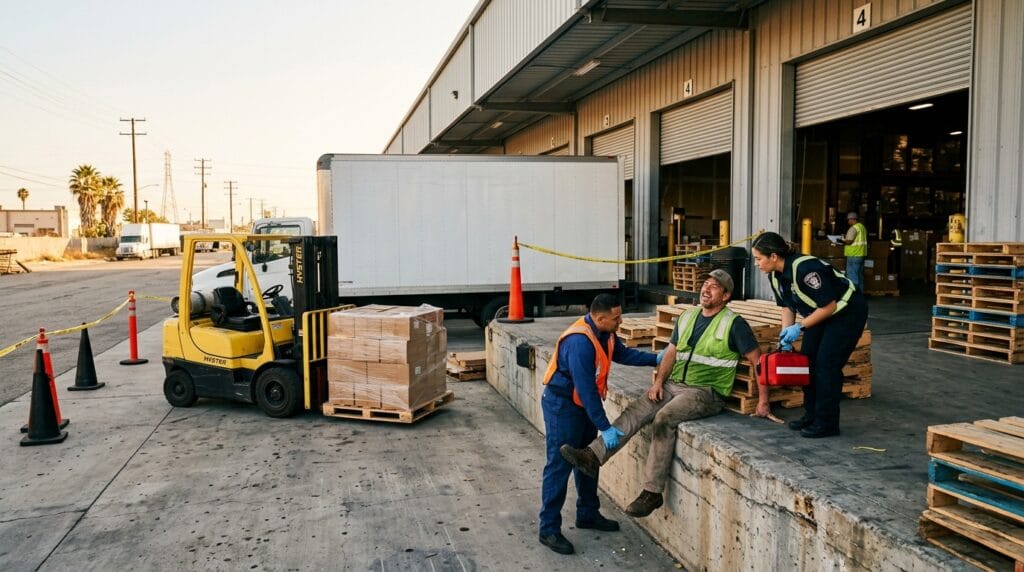
Loading docks are one of the most dangerous areas in a warehouse. Trucks reverse into position. Forklifts enter trailers. Pallets shift. Workers walk near moving equipment. Dock plates, ramps, and gaps can also create fall or crush hazards.
A serious loading dock injury may happen when a truck pulls away too early, a forklift falls from a dock edge, cargo shifts inside a trailer, or a worker is pinned between equipment. These cases can involve both warehouse and trucking evidence. For related background, read our guide on truck accidents in Riverside, California.
Pedestrian workers can be hit even when they are careful
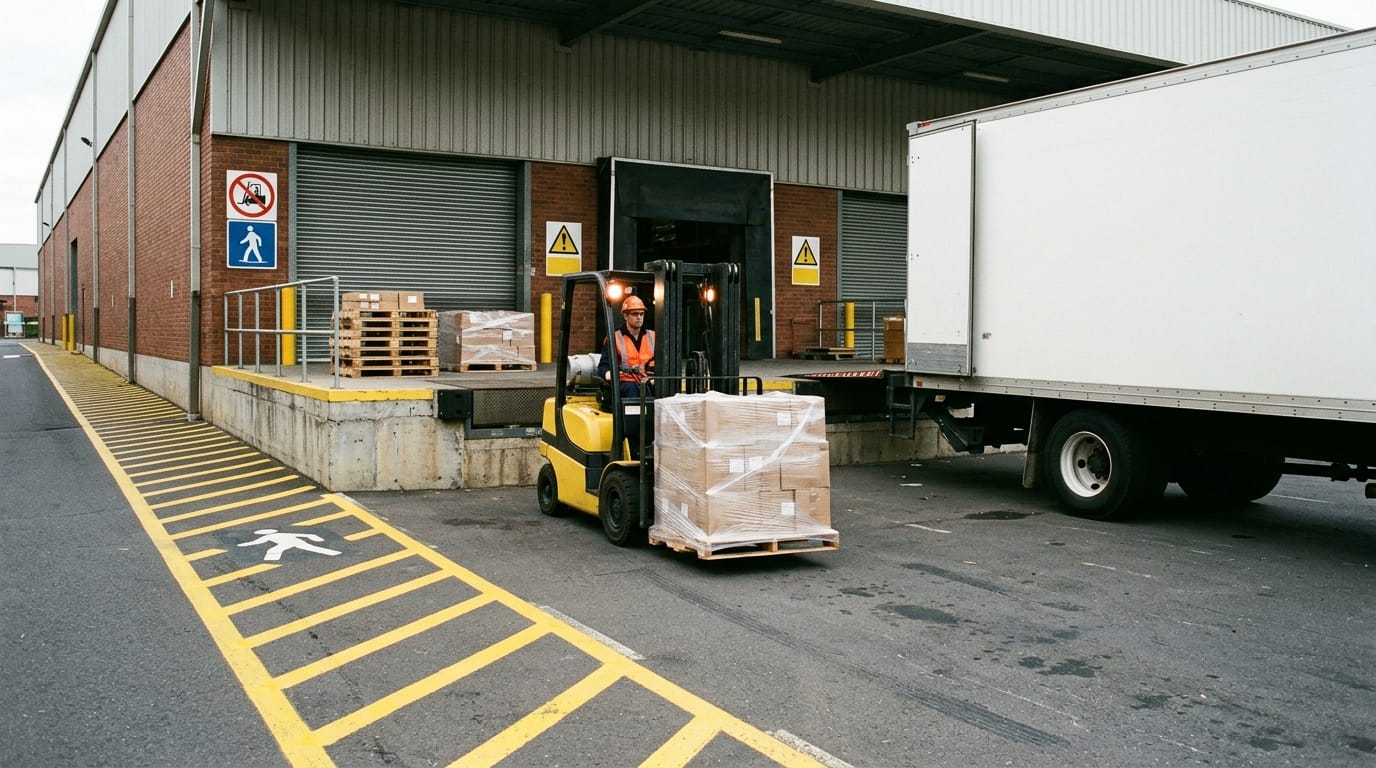
Forklift-pedestrian collisions are not always caused by careless workers. A pedestrian may be following instructions and still be injured. Poor aisle design, blocked sightlines, missing floor markings, loud equipment, poor lighting, blind corners, and rushed operations can all increase risk.
In some warehouses, workers and forklifts share the same lanes. That setup can become dangerous when there are no barriers, mirrors, warning lights, horns, or clear traffic rules. Therefore, the investigation should examine the full safety system, not only the final seconds before impact.
Evidence can disappear quickly after a warehouse incident
Warehouse evidence can disappear fast. Video may be overwritten. Damaged pallets may be thrown away. The forklift may be returned to service. The floor may be cleaned. A trailer may leave the facility. Witnesses may be moved to different shifts.
Because of that, injured people should document as much as possible as soon as it is safe. Photos can show the forklift, dock area, warning signs, floor markings, lighting, damaged cargo, spill hazards, broken equipment, and the position of nearby trucks. Also, names of witnesses should be saved quickly.
Digital evidence may also matter. Some forklifts, trucks, and facilities use cameras, access logs, telematics, GPS records, incident reports, and maintenance software. This evidence may show speed, timing, operator activity, equipment condition, or who was present at the site.
Your site already has a helpful related article on Riverside dashcam and black box evidence in 2026. Although that article focuses on vehicle crashes, the same idea applies here. Modern injury claims often depend on digital proof that must be preserved early.
Training, maintenance, and inspection records may matter
A forklift injury investigation should look at training and maintenance. Was the operator trained? Was the forklift inspected before use? Were brakes, alarms, lights, forks, tires, steering, and controls working correctly? Were defects reported before the incident?
These records can help show whether the incident was preventable. They may also reveal repeated problems. For example, if workers had complained about poor visibility, broken backup alarms, unsafe speed, or crowded aisles before the injury, that history may become important.
How a Riverside Warehouse Forklift Injury Claim May Be Built
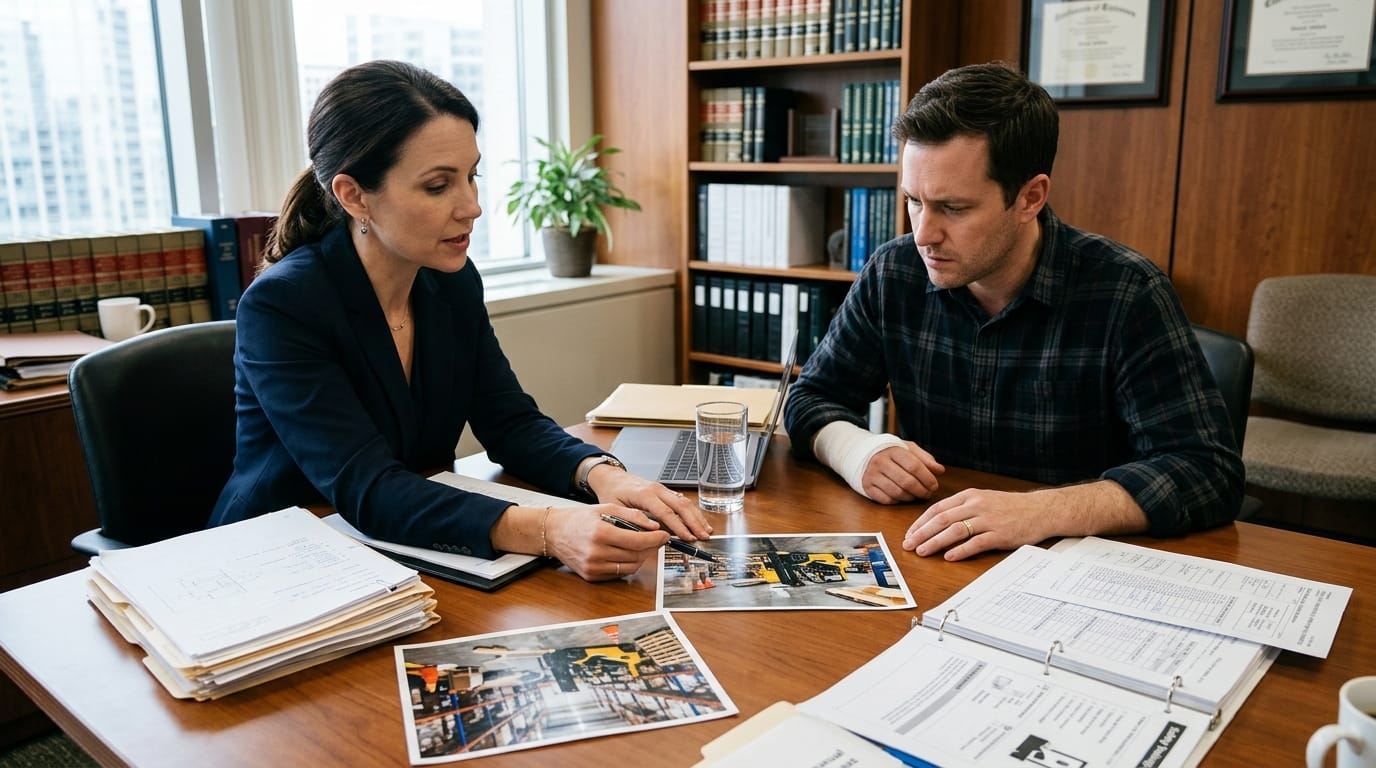
A strong claim usually starts with medical care. Forklift injuries can be severe. They may include fractures, crush injuries, head trauma, spinal injuries, knee damage, shoulder injuries, nerve damage, burns, amputations, or internal injuries. Some symptoms may become worse after the adrenaline fades.
After medical care, documentation becomes critical. Injured workers should keep records of treatment, pain levels, work restrictions, missed income, prescriptions, therapy, referrals, and follow-up appointments. Medical records help connect the injury to the incident and explain how the injury affects daily life.
For more detail, read the importance of medical documentation in personal injury cases. Good medical documentation can strengthen both the injury timeline and the damages portion of a claim.
Next, the investigation should identify every possible party involved. That may include the employer, warehouse owner, forklift operator, forklift owner, staffing agency, maintenance vendor, trucking company, cargo loader, property manager, or equipment manufacturer. The right answer depends on the facts.
Third-party liability can change the value and direction of the case
Third-party liability matters because a person or business outside the direct employer may have contributed to the injury. For example, a delivery driver may pull away from the dock too early. A forklift maintenance company may miss a serious defect. A property owner may fail to correct dangerous traffic flow. A product defect may cause sudden equipment failure.
These issues can change the case. Workers’ compensation may cover medical care and partial wage replacement. However, a third-party injury claim may also seek damages related to pain, suffering, and other losses when another party’s negligence caused harm.
That is why it is risky to assume there is only one claim. In a busy Riverside warehouse, multiple companies may operate in the same space. The incident report may not name every responsible party. A deeper investigation may be needed.
This issue also connects with trucking and route pressure. If warehouse operations involved freight delivery, dispatch instructions, or commercial vehicle movement, review our article on Riverside truck route accident claims in 2026. Truck movement and warehouse safety often overlap.
Deadlines and insurance questions should be reviewed early
Deadlines can be strict. Workers’ compensation deadlines, personal injury deadlines, evidence preservation requests, and insurance notice requirements may all matter. Therefore, injured people should not wait until the injury becomes financially overwhelming.
Insurance can also become complicated. A warehouse injury may involve employer coverage, commercial liability insurance, trucking insurance, vendor policies, property insurance, or underinsured parties. If coverage is limited or disputed, read underinsured driver accidents in Riverside. The context is different, but the insurance problem can feel similar: fault is only useful if there is coverage to pay the loss.
If the injury happened near an outdoor loading area, construction zone, or temporary traffic pattern, work-zone evidence may also matter. For related reading, see Riverside work zone accident claims in 2026.
Finally, basic post-incident steps still matter. Report the injury. Get medical care. Save photos. Keep witness names. Avoid broad recorded statements until the facts are clear. If the incident also involved a vehicle crash outside the warehouse, our guide on what to do after a car accident in Riverside may help with documentation steps.
In the end, a Riverside warehouse forklift injury claim should not be treated as a routine paperwork issue. Forklift and loading dock injuries can involve serious harm, multiple companies, missing records, and fast-changing evidence. The sooner the scene, equipment, video, training records, maintenance logs, and medical proof are protected, the stronger the investigation can become.
Riverside’s warehouse and logistics activity is not slowing down. Because of that, injured workers and families need to understand how these claims work. A careful investigation can show whether the incident was unavoidable, or whether unsafe systems, poor training, bad maintenance, rushed operations, or third-party negligence caused a preventable injury.