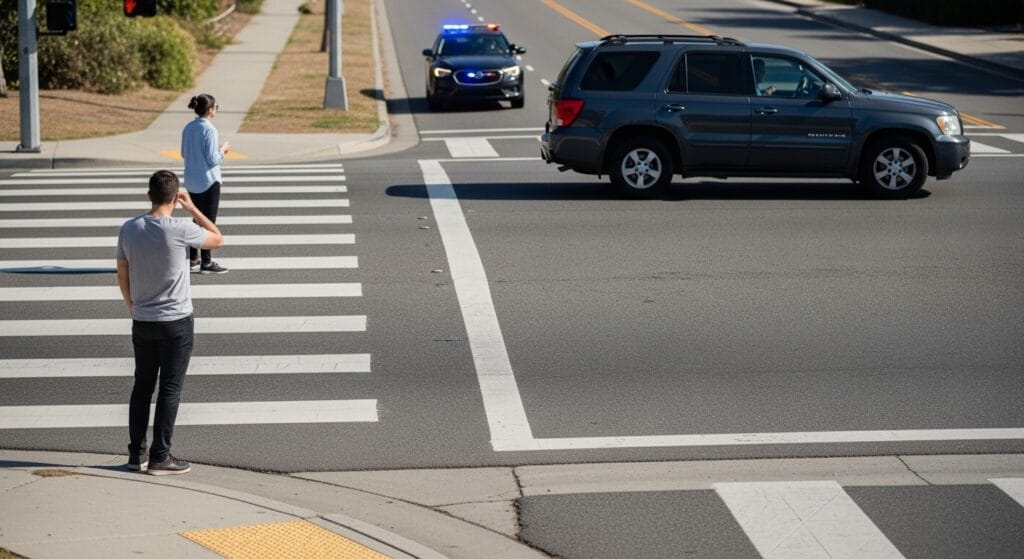
A Riverside crosswalk accident can look simple at first: a pedestrian was crossing, a driver hit them, and everyone assumes the driver is automatically responsible. In real claims, the investigation is usually more detailed. In 2026, crosswalk visibility is an even stronger issue because California’s daylighting rule now affects how parked vehicles, blocked sightlines, and intersection design may be reviewed after a pedestrian crash.
Daylighting means keeping the approach to a crosswalk clear so drivers and pedestrians can see each other before either one is already in danger. California Assembly Bill 413 changed the conversation by restricting parking close to marked and unmarked crosswalks. For Riverside pedestrians, that matters because many serious crashes happen near intersections, commercial corridors, school zones, apartment exits, bus stops, and neighborhood streets where drivers may not see someone until the last second.
This article explains why crosswalk visibility should be part of a modern pedestrian injury claim, what evidence may matter, and how injured people can protect the value of a case after a Riverside crosswalk accident.
Why Crosswalk Visibility Is a Bigger Legal Issue in 2026
Pedestrian injury claims are not only about impact speed. They are also about what the driver could see, what the pedestrian could see, whether the crossing area was predictable, and whether another hazard made the crash more likely. A blocked corner, illegally parked vehicle, oversized truck, delivery stop, poor lighting, or missing warning sign can all become part of the liability story.
California’s daylighting rule changed the safety baseline
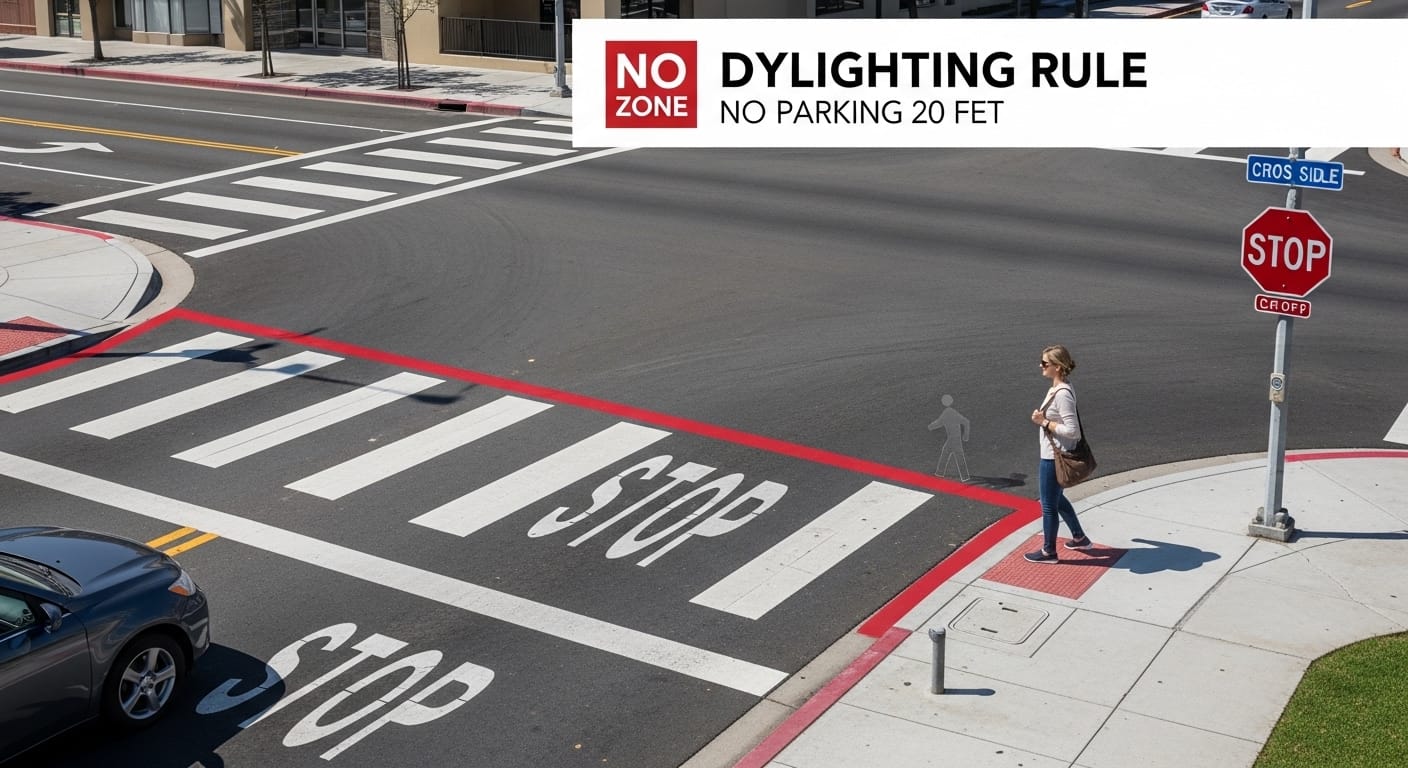
Under California’s updated parking rule, vehicles generally may not stop, stand, or park within 20 feet of the vehicle approach side of a marked or unmarked crosswalk, or within 15 feet where a curb extension is present. That rule does not automatically decide every injury case. A parking ticket is not the same thing as full civil liability. Still, the rule gives investigators a clearer safety standard to examine when a crash involves blocked views near a crossing.
For example, if a parked SUV blocks the driver’s sightline, the driver may argue the pedestrian “came out of nowhere.” The injured person may argue the danger was created by poor visibility, driver inattention, or an illegally parked vehicle.
Unmarked crosswalks still matter
Many people think a crosswalk only exists when white lines are painted on the road. That misunderstanding can hurt both drivers and pedestrians. At many intersections, an unmarked crosswalk may still exist where sidewalks continue across the street. In a claim, the absence of paint does not always mean the pedestrian had no right to cross or that the driver had no duty to watch for people entering the roadway.
This is one reason a Riverside crosswalk accident should be investigated quickly. Photos taken days later may miss the real problem if a vehicle was moved, a delivery truck left, lighting changed, or temporary construction signs were removed.
Riverside County pedestrian numbers make the issue local
Pedestrian safety is not just a statewide talking point. Riverside County continues to see a meaningful number of pedestrian victims. Local roads mix commuters, delivery vehicles, college traffic, families, tourists, older adults, cyclists, e-bike riders, and people walking to transit or nearby businesses. When those groups meet at busy crossings, a small visibility problem can become a serious injury event.
This topic connects naturally with the main Pedestrian Accident page and the broader Riverside personal injury statistics post.
Nighttime and lighting can change the fault dispute
Visibility is not only about parked cars. Nighttime conditions, glare, broken streetlights, dark clothing, faded markings, and headlight performance may all come up. Insurers often try to shift blame onto pedestrians by saying the driver had no time to react. That argument should not be accepted without reviewing speed, phone use, dashcam footage, intersection layout, lighting, weather, and whether the driver was approaching an area where pedestrians were expected.
In California, fault can be shared. That means an insurer may try to assign a percentage of responsibility to the pedestrian even when the driver clearly played a major role. The practical goal is to use evidence to push back against unfair blame and show why the crash happened.
What Victims Should Do After a Riverside Crosswalk Accident
After a pedestrian crash, the injured person may be taken away by ambulance before they can collect evidence. Family members, witnesses, or legal representatives may need to preserve proof later because intersection evidence can disappear fast.
Preserve photos, video, and witness information quickly
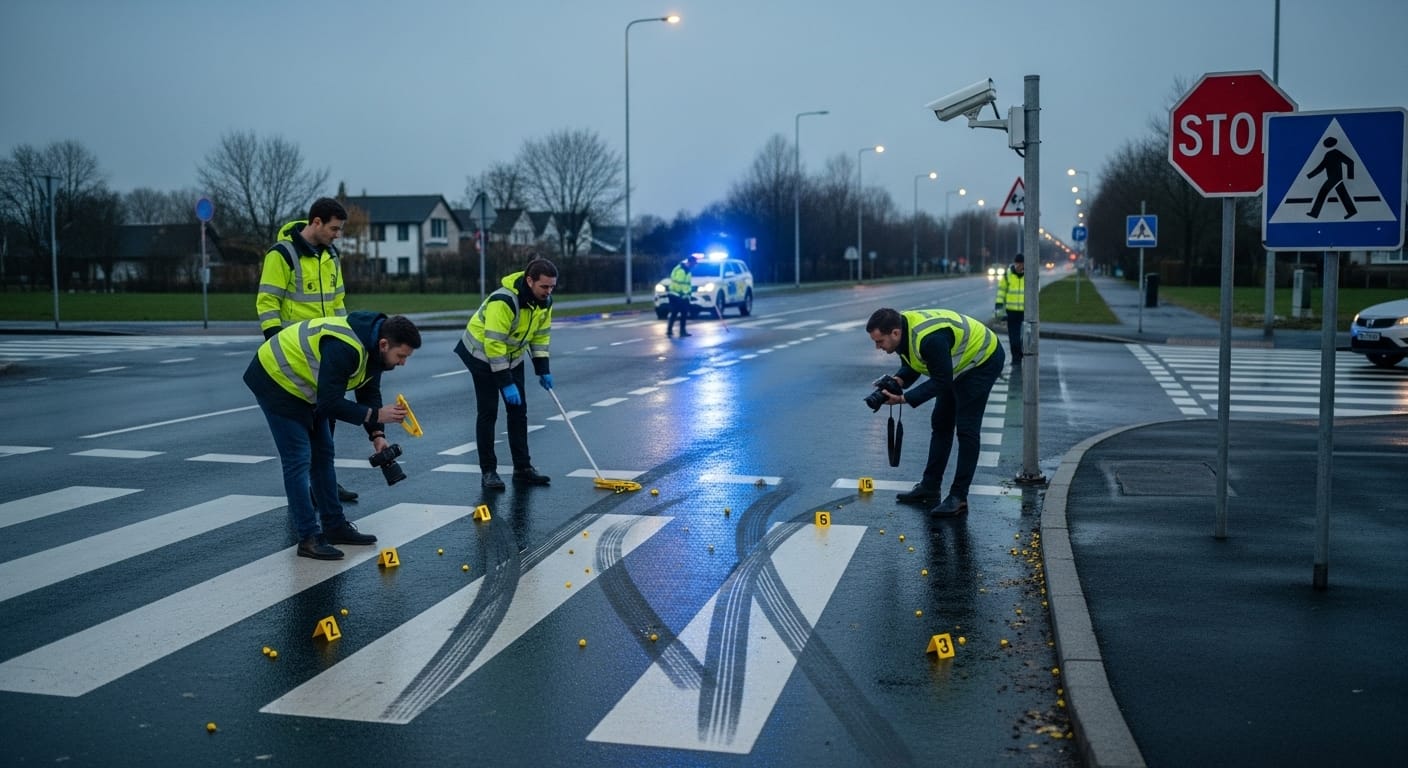
Start with the scene. Take photos from the driver’s approach direction, the pedestrian’s crossing direction, and both corners of the intersection. Capture parked vehicles, red curbs, signs, faded markings, streetlights, shadows, traffic signals, skid marks, debris, nearby businesses, bus stops, school zones, driveways, and construction activity. Do not only photograph the damaged vehicle. In a visibility case, the environment may be just as important as the impact point.
Nearby video can matter even more. Gas stations, stores, apartment buildings, doorbell cameras, buses, rideshare vehicles, delivery vehicles, and traffic cameras may capture the moments before the crash. The problem is that many systems overwrite footage within days. A preservation request should be sent quickly when the injury is serious.
Medical records should match the injury story
A pedestrian can suffer far more than a simple bruise. Common injuries include fractures, head trauma, spinal injuries, knee and shoulder damage, road rash, internal injuries, and psychological trauma after being hit by a vehicle. Prompt medical care helps protect health and creates records that connect the injuries to the crash. Readers dealing with treatment bills can also review who pays medical bills after a Riverside accident.
Look beyond the driver when the facts justify it. The driver is usually the first focus, but not always the only one. A crosswalk case may involve a vehicle owner, employer, delivery company, public entity, contractor, or another driver who created the sightline problem. If an illegally parked vehicle blocked the corner, that fact should be documented.
Claims involving public property or government agencies may have shorter deadlines than ordinary injury cases. That is why a serious Riverside crosswalk accident should not be treated like a routine insurance claim.
Do not let the insurer frame the case too early
Insurance adjusters may ask questions that sound casual but are designed to shape the claim. They may ask whether the pedestrian looked both ways, whether they were wearing dark clothing, whether they were using a phone, or whether they crossed outside the lines. Those questions may be relevant, but they are not the whole story. Driver speed, distraction, failure to yield, blocked views, poor lighting, and intersection design may be just as important.
A strong claim does not rely on assumptions. It relies on records, photos, video, medical documentation, witness statements, and a clear explanation of why the crash happened. When injuries are serious, victims should also think about available insurance limits and whether underinsured motorist coverage may apply. Your related guide on underinsured driver accidents in Riverside is a good next internal link for that issue.
Crosswalk safety is becoming a bigger legal issue because visibility, parking rules, and pedestrian rights are being discussed more openly in California. For injured people, the lesson is direct: do not let a crash be reduced to “the pedestrian stepped out” or “the driver did not see them.” The better question is why the driver did not see them.
For additional authority, readers can review California’s AB 413 daylighting bill and UC Berkeley SafeTREC’s pedestrian safety data. Those sources help explain why crosswalk visibility is not just a parking issue. It is a serious injury prevention issue.