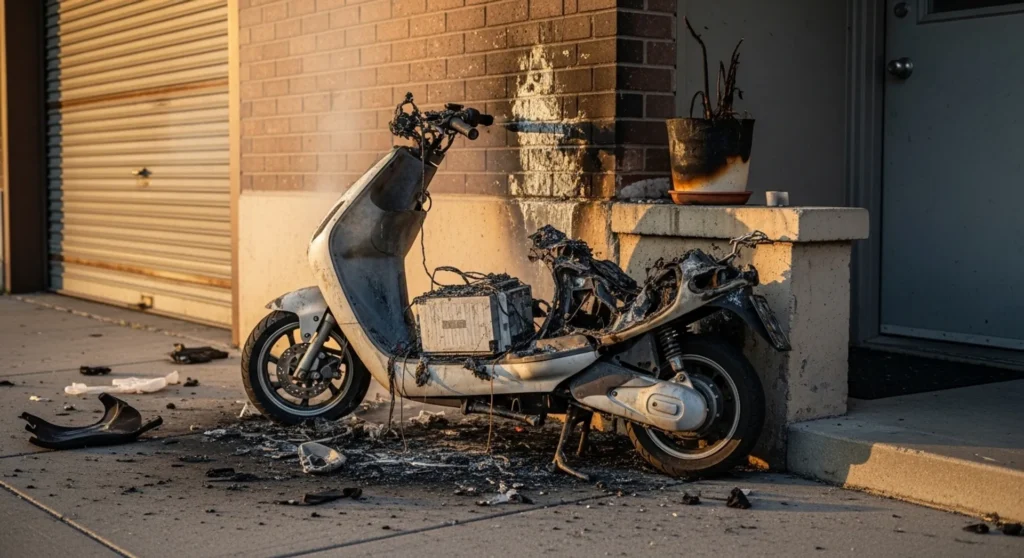
Not every serious injury case starts with a moving vehicle. Some begin in a garage, apartment, hallway, or charging corner when a battery overheats and turns a routine moment into a fire emergency. That is why a lithium battery fire injury Riverside case can become a major personal injury or product liability claim instead of a simple property-loss issue.
This topic is especially timely in 2026. California’s new e-bike safety rules now require certified battery and electrical safety standards for e-bikes sold or leased in the state. At the same time, battery-fire incidents remain a live public-safety concern. This week, a faulty e-bike battery reportedly started a fatal apartment fire in San Jose, and San Francisco officials are now pushing tighter enforcement against uncertified e-bike and scooter batteries because battery-related fires have been rising.
Most people hear about these fires and assume the event was random bad luck. Sometimes that is true. Sometimes it is not. A lithium-ion battery fire may involve a defective battery pack, a dangerous charger, poor product design, missing warnings, counterfeit parts, unsafe modifications, or negligent handling by a rental or fleet company. When that happens, the legal question changes from “what caught fire?” to “who created the risk?”
Why Battery Fire Cases Are Different From Ordinary Injury Claims
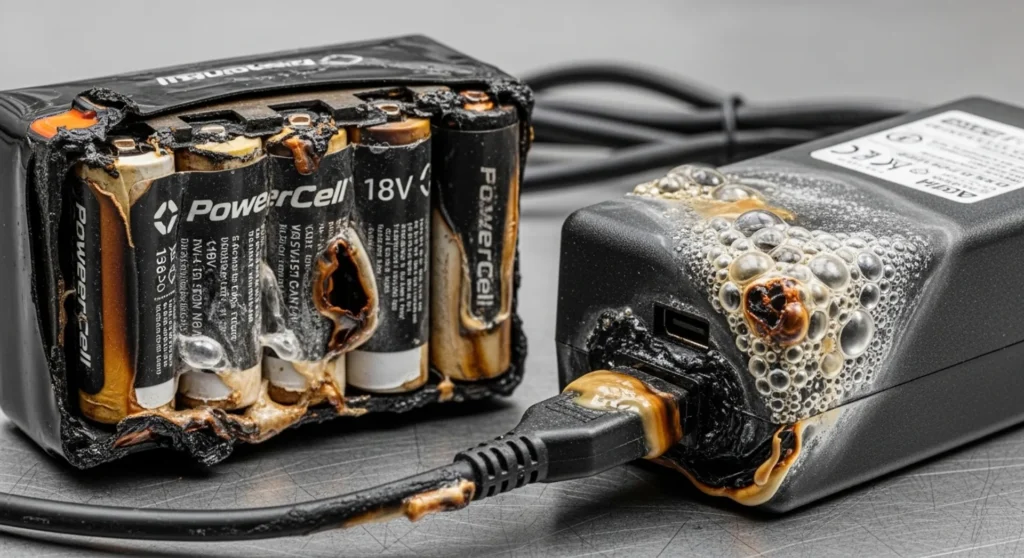
A lot of injury cases focus on negligent driving or unsafe property conditions. Battery fire claims often go in a different direction. They may involve product liability law, technical inspection of damaged components, and questions about design, manufacturing, warnings, and distribution.
These Cases Often Turn on Product Defects
If a battery ignites during normal charging or ordinary use, the core issue may not be user carelessness. It may be whether the product was unreasonably dangerous. In California, product-related injury cases can involve design defects, manufacturing defects, or failure-to-warn theories. That matters because a victim does not always need to prove traditional negligence in the same way a normal accident case would.
Battery incidents can also involve more than the battery alone. The charger, adapter, connector, wiring, battery-management system, or overall device design may all contribute. Some fires start after people use mismatched or low-quality charging parts. Others involve devices sold through online channels with poor traceability or weak quality control. The technical cause has to be investigated, not guessed.
California’s 2026 Rules Make the Issue More Important
California’s 2026 e-bike rules tightened battery and electrical safety requirements by requiring third-party certification standards for batteries and systems sold or leased in the state. That does not automatically prove liability in every fire case, but it does show the state sees battery safety as a real and growing risk. It also gives injured consumers a stronger factual backdrop when asking whether a product should have been on the market in the first place.
This topic links naturally with your existing post on juvenile e-bike accidents in Riverside County, because both subjects sit inside the same 2026 micromobility and safety-law cluster.
These Fires Can Cause More Than Burns
People often think first about flames and skin injuries. Battery fires can do far more than that. Victims may suffer smoke inhalation, lung injury, eye injury, falls while escaping, toxic exposure, and major property damage. Reporting on the recent San Jose e-bike battery fire emphasized how fast toxic smoke can fill a space and how dangerous it is even for trained firefighters.
More Than One Party May Be Responsible
Battery-fire claims often have a longer liability chain than ordinary accidents. Depending on the facts, responsibility may involve the battery manufacturer, device maker, importer, distributor, online seller, charger manufacturer, repair shop, or rental operator. A shared-mobility company may also face questions if it maintained or supplied the device poorly.
That broader liability picture matters because serious injuries often require serious insurance and asset exposure to make a claim financially meaningful. A consumer may have been hurt in a small-space fire, but the legal case can point toward corporate defendants rather than only the individual who happened to be charging the device.
What Injured People Should Do After a Lithium-Ion Battery Fire
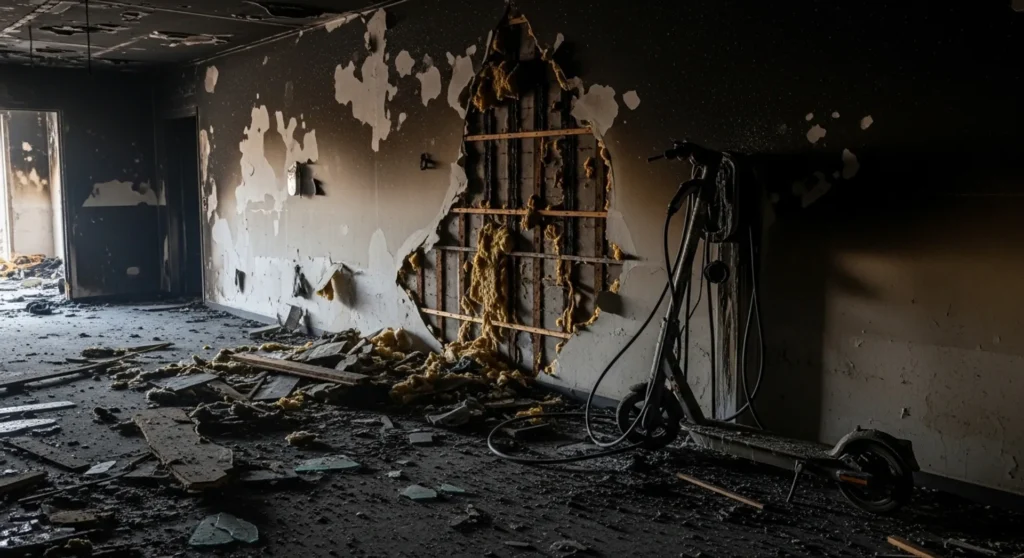
After any fire, the first priority is medical care and immediate safety. Once that happens, the next steps matter a lot. Battery cases can become much harder to prove if key evidence is discarded or cleaned up too early.
Preserve the Device, Charger, and Scene Evidence
Do not throw away the burned device, battery pack, charger, or related parts if it is safe to preserve them. Those items may become the most important evidence in the case. Photograph the remains, the charging location, burn patterns, smoke damage, outlets, extension cords, and any nearby materials that caught fire.
Keep purchase receipts, packaging, manuals, warning labels, online order confirmations, seller information, product listings, and serial numbers. If the device came from a rental or app-based system, save screenshots, account records, and communications. Product cases often rise or fall on identification of the exact item and the chain of sale.
Get Medical Treatment Even if the Injury Seems Minor
Smoke inhalation and burn injuries do not always look severe at first. Breathing problems can worsen. Burns can deepen. Escape injuries can reveal themselves later. Prompt medical care protects your health and ties the incident clearly to your injury records.
This point also fits with the broader site structure because Riverside Accident Lawyer already publishes practical injury-guidance content about what to do after an accident and how insurance issues unfold after serious events.
Be Careful With Early “User Error” Claims
Manufacturers and insurers often lean on user-error explanations quickly. Sometimes they are right. Sometimes they are using the easiest available defense before anyone has reviewed the evidence. A person may have used the device in an ordinary way and still been injured by a dangerous battery, defective charger, or poor warning system.
Why This Topic Fits Riverside Accident Lawyer Right Now
This is a strong addition to the site because it extends the current 2026 content into a related but distinct injury area. The blog already covers juvenile e-bike accidents, underinsured drivers, truck collisions, and self-driving/rideshare liability. A battery-fire post builds directly on the e-bike safety trend without duplicating those articles.
The timing also makes sense. California is actively tightening e-bike battery standards, recent fire reporting shows the danger is current, and local readers are increasingly likely to encounter e-bikes, e-scooters, chargers, and lithium-powered devices in garages, apartments, and family homes.
The bottom line is simple. A lithium-ion battery fire in Riverside may be more than an unfortunate household event. If a defective product, unsafe charging system, missing warning, or negligent commercial actor played a role, the case may support a real injury claim. Victims should not assume these fires are automatically unavoidable. Sometimes they were preventable from the start.
For external authority links, you can point readers to consumer-product safety guidance and current California reporting on battery-fire risks and the state’s 2026 e-bike safety standards.