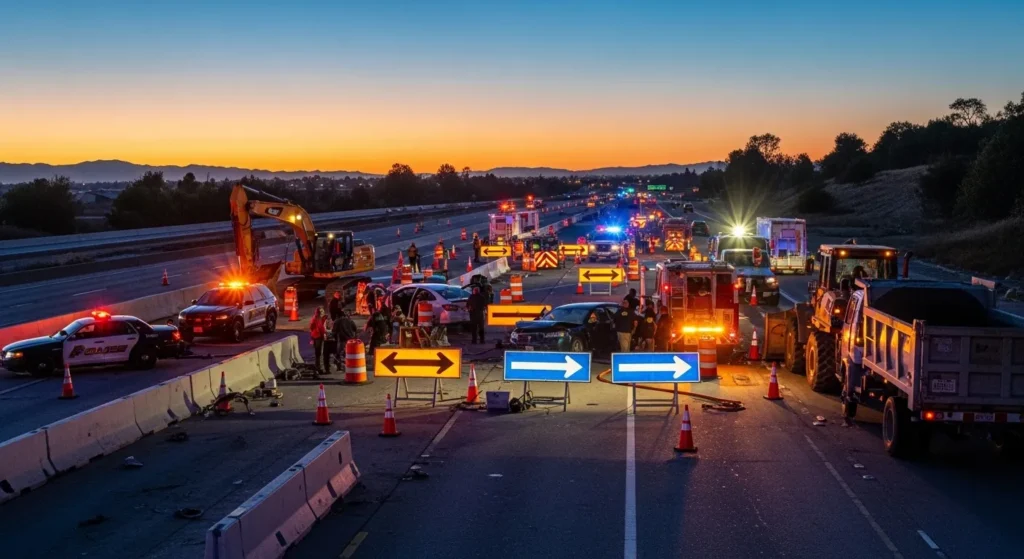
Work zone crashes have always been dangerous, but they feel even more important in 2026. Riverside drivers spend a lot of time on major freeway corridors, and road construction never stays in the background for long. Lane shifts, sudden slowdowns, narrow shoulders, cones, barriers, flashing trucks, and distracted drivers can turn a routine commute into a serious collision in seconds. When that happens, the legal issues often become more complicated than they would in an ordinary rear-end or lane-change crash.
That is exactly why Riverside work zone accident claims 2026 is a strong topic for your site right now. It fits naturally with your existing content on truck accidents in Riverside, underinsured driver accidents in Riverside, heat-related car accidents in Riverside, and self-driving or rideshare crashes in Riverside. It also fills a gap because your current blog does not yet have a dedicated post on construction-zone or maintenance-zone liability.
For injured people, that gap matters. A work zone crash may look simple at first. One driver hits another. Traffic backs up. A citation may even get issued. But real fault analysis can go much deeper. Was the driver speeding for the lane closure? Did someone fail to move over? Were signs visible enough? Was the taper too short? Did a contractor leave equipment or debris in a dangerous place? Did a truck driver follow too closely in a narrowed lane? Those are not small details. In the right case, they can shape the entire claim.
Why Riverside Work Zone Accident Claims 2026 Matter More Now
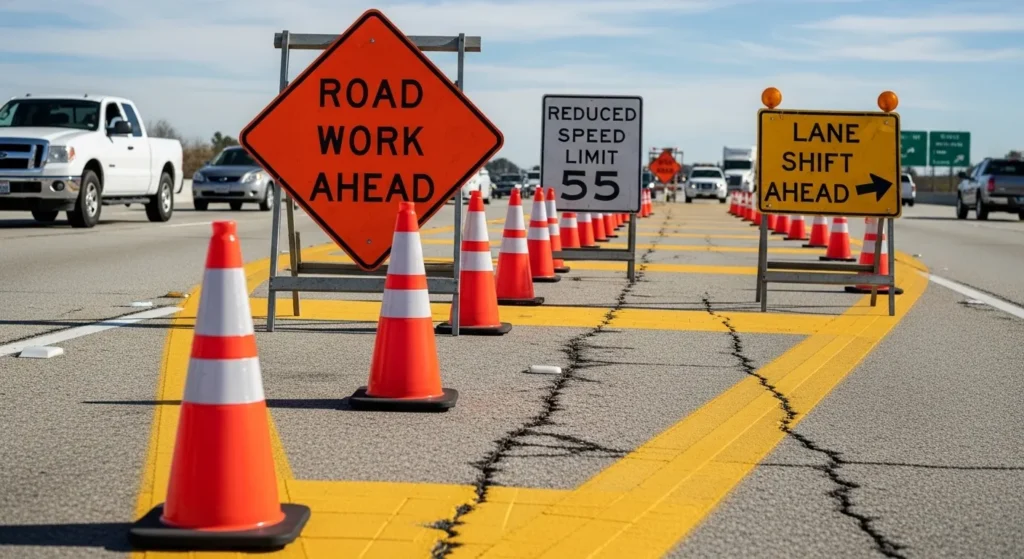
Work zones create a different driving environment. Normal traffic expectations change fast. Lanes may disappear without much room for correction. Drivers may merge later than they should. Construction vehicles may enter or exit the roadway. Crews may work behind barriers, on shoulders, or close to active lanes. Even careful drivers can get trapped in a dangerous chain reaction when one person misjudges speed, spacing, or visibility.
That makes these crashes more than ordinary “bad driving” cases. In 2026, California has also put extra attention on work-zone safety. That does not mean every work zone collision automatically creates a stronger injury claim. It does mean there is a more current legal and safety backdrop around these cases, and that backdrop can affect how lawyers, insurers, and investigators evaluate fault.
New speed-safety systems and move-over rules changed the conversation
California’s newer work-zone enforcement and roadway-safety rules matter because they reflect a basic reality: construction and maintenance zones are high-risk areas. If the state is authorizing speed-safety systems and expanding duties to move over or slow down around more hazard situations, that tells you something important. It tells you these crashes are not being treated as rare flukes. They are being treated as a real and recurring safety problem.
Work zones create layered fault questions, not just simple rear-end cases
One of the biggest mistakes injured people make is assuming a work zone crash will be analyzed the same way as a normal freeway collision. Sometimes it will. Often it will not. Work zones can raise questions about contractor setup, lane-control plans, warning signs, traffic taper design, truck routing, visibility, and whether drivers had enough notice before traffic narrowed or stopped.
That does not mean the construction company is automatically at fault. It means a good claim looks beyond the first obvious driver error. A rear-end crash in a work zone may still be mostly about following distance. But it may also involve poor traffic control, confusing lane transitions, or dangerous roadside conditions that made the pileup worse than it should have been.
New enforcement tools affect evidence, but they do not replace proof
Some people hear about work-zone speed-safety systems and think liability becomes automatic. That is not how it works. A speed camera or enforcement system may support a broader safety narrative, but an injury claim still depends on proving what happened in the actual crash. The injured person still needs evidence on speed, lane position, impact timing, braking, visibility, and medical harm.
That is why work-zone claims still start with the basics. Scene photos matter. Vehicle damage matters. Witness names matter. Dashcam footage matters. So do medical records and early treatment decisions. If you are trying to protect a claim after a crash, it also makes sense to review Should I Talk to the Insurance Company After an Accident? and What to Do After a Car Accident in Riverside: Step-by-Step Legal Guide.
Riverside drivers face these risks on active District 8 corridors
Riverside County is not dealing with some abstract future work-zone problem. District 8 continues to have active project activity, and that matters because the more often drivers encounter lane closures, equipment, night work, and shifting traffic patterns, the more chances there are for serious mistakes. For a region with major commuter and freight traffic, these risks are not theoretical.
Trucks, lane shifts, and sudden slowdowns often increase the damage
Work-zone crashes often hit harder because traffic behavior becomes less predictable. Passenger vehicles may brake suddenly when a lane disappears. A truck may not stop as quickly as the cars ahead. A driver may try to cut into a closing lane too late. Another driver may stay next to a larger vehicle with no shoulder left for escape. Once a crash begins in that kind of setup, secondary impacts become much more likely.
That is one reason work-zone cases often overlap with commercial-vehicle issues. If the crash involved a delivery vehicle, contractor truck, semi, or heavy commercial traffic, your readers may also want to review Truck Accidents in Riverside, California: Causes, Liability, and Legal Options. The liability path is not always the same, but the evidence pressure can look very similar.
What Injured People Should Prove After a Riverside Work Zone Crash
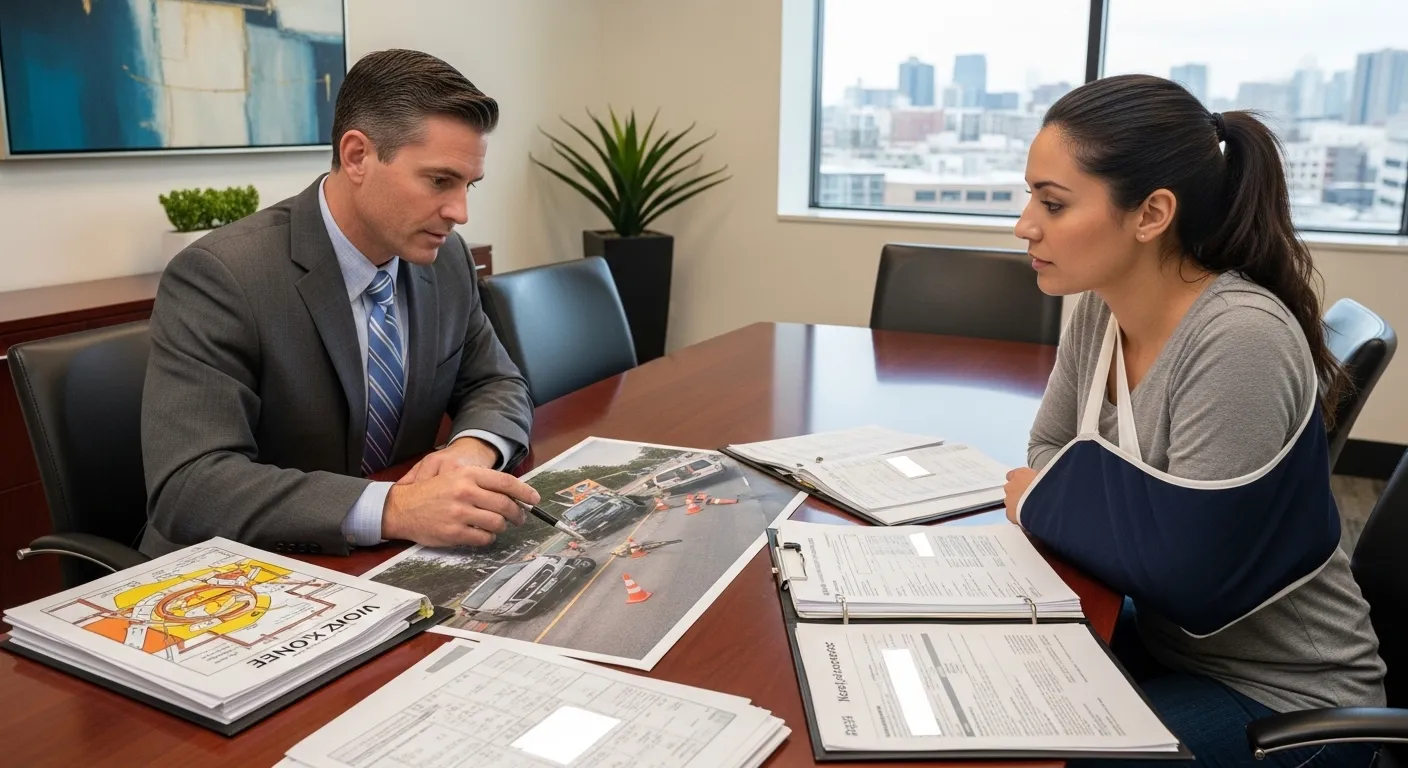
The strongest work-zone injury claims do not rely on assumptions. They rely on details. In a standard crash, the main questions are usually who caused the impact and how badly the victim was hurt. In a work-zone crash, the file may need more than that. It may need proof about signage, cones, merge distance, lighting, taper length, warning trucks, lane markings, and whether drivers had a fair chance to react to the hazard ahead.
This is also where comparative negligence becomes a real issue. Even when another driver made the bigger mistake, the defense may still argue that the injured person drove too fast for conditions, followed too closely, failed to merge earlier, or ignored warning signs. Because California uses comparative negligence, those arguments can reduce recovery if they gain traction. That makes early evidence even more important than usual.
Early evidence can decide whether the work zone was handled safely
A surprising number of work-zone details disappear quickly. Cones get moved. Sign boards come down. flagging patterns change. Trucks leave. Night lighting setups vanish by morning. Fresh skid marks fade. By the time an adjuster starts asking questions, some of the best proof may already be gone. That is why work-zone cases reward fast investigation more than many ordinary crashes do.
What to preserve in the first few days after the crash
Start with your health. Get treatment and make sure the collision is documented. Then preserve the work-zone setting as thoroughly as possible. Photograph warning signs, merge arrows, lane-drop signs, cones, barriers, flashing trucks, shoulder conditions, pavement markings, lighting, traffic queues, and any equipment or debris near the impact area. If the crash happened at night, note exactly how dark the area was and where the warning devices were placed.
Try to identify every possible source of video. Nearby traffic cameras, dashcams, commercial fleet cameras, and business surveillance can make a huge difference. Witnesses matter too, especially if someone saw another driver speeding through the closure, ignoring hazard lights, or failing to move over. Medical proof is just as important. If you want a strong companion piece for this point, link readers to The Importance of Medical Documentation in Personal Injury Cases.
Insurance issues can also become messier in these cases than victims expect. A work-zone crash may involve multiple drivers, low policy limits, employer-related coverage, or a commercial insurer. That is another reason this topic pairs well with How Much Is My Car Accident Claim Worth in California? and Underinsured Driver Accidents in Riverside. Proving fault is only part of the fight. Getting enough coverage to pay the loss can become a second battle.
In the end, Riverside work zone accident claims 2026 are not just about who hit whom. They are about whether the zone was set up safely, whether drivers reacted reasonably, and whether the evidence can still show what really happened after the scene changes. For an outside source, the California Highway Patrol’s summary of new 2026 public safety laws is a useful starting point. It helps explain why work-zone behavior is under more scrutiny now and why injured people should treat these crashes as serious evidence cases from day one.