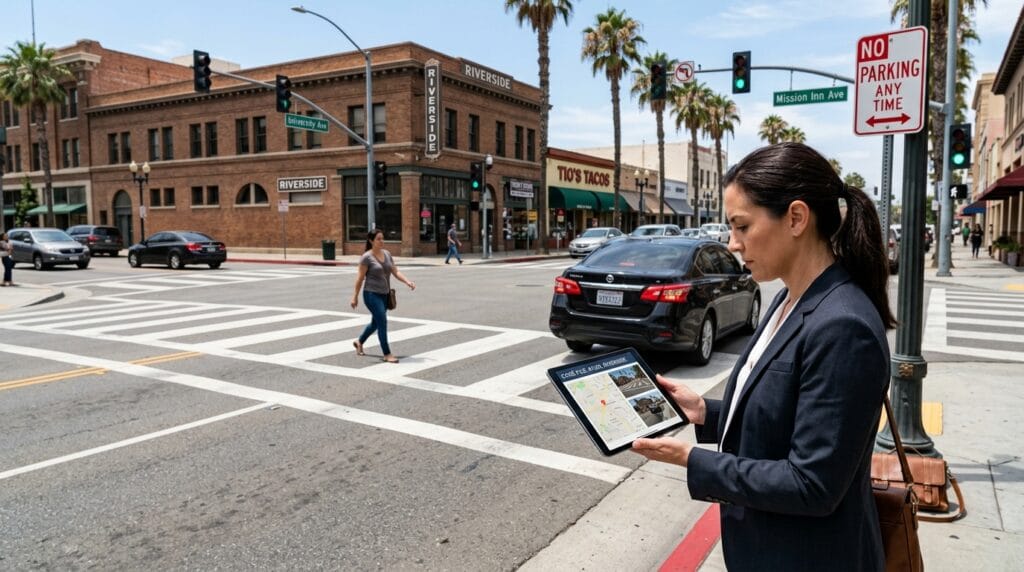
A Riverside crosswalk accident can become more complicated than people expect. Many pedestrian crashes happen at or near intersections, where visibility, speed, driver attention, parked vehicles, and road design all matter. In 2026, California’s daylighting law gives injured pedestrians and drivers another issue to review: whether parked vehicles blocked the view near a crosswalk.
California’s daylighting rule, known as AB 413, restricts parking, stopping, or standing too close to many crosswalk approaches. The goal is simple. When vehicles park too close to an intersection, they can hide pedestrians, cyclists, and approaching traffic. By clearing space near crosswalks, drivers should have a better chance to see people before a crash happens.
For injury claims, that detail can matter. A driver may say a pedestrian “came out of nowhere.” A pedestrian may say a vehicle blocked the driver’s view. An insurance company may argue that the injured person should have been more careful. A strong claim should not rely on guesses. It should look at the intersection, the parked vehicles, sightlines, speed, traffic signals, witness statements, video footage, and medical records.
If you need a general first-step guide after a crash, Riverside Accident Lawyer already explains what to do after a car accident in Riverside. This article focuses specifically on crosswalk crashes, daylighting rules, visibility evidence, and how fault disputes may develop.
Why Riverside Crosswalk Accident Claims Are Changing In 2026
Crosswalk cases often turn on visibility. A pedestrian may have the right to cross, but the driver may claim they did not see them in time. Sometimes the driver simply failed to pay attention. Other times, the intersection itself created a danger. Parked trucks, large SUVs, delivery vans, trees, signs, construction equipment, or poor lighting can reduce the time a driver has to react.
California’s daylighting law matters because it directly targets blocked sightlines near crosswalks. The law does not automatically decide every injury claim, but it can help frame important questions. Was a vehicle parked where it should not have been? Did that vehicle block the view? Did the driver fail to slow down near a crosswalk? Did the pedestrian enter the road from behind an obstruction?
What California’s daylighting law means near crosswalks
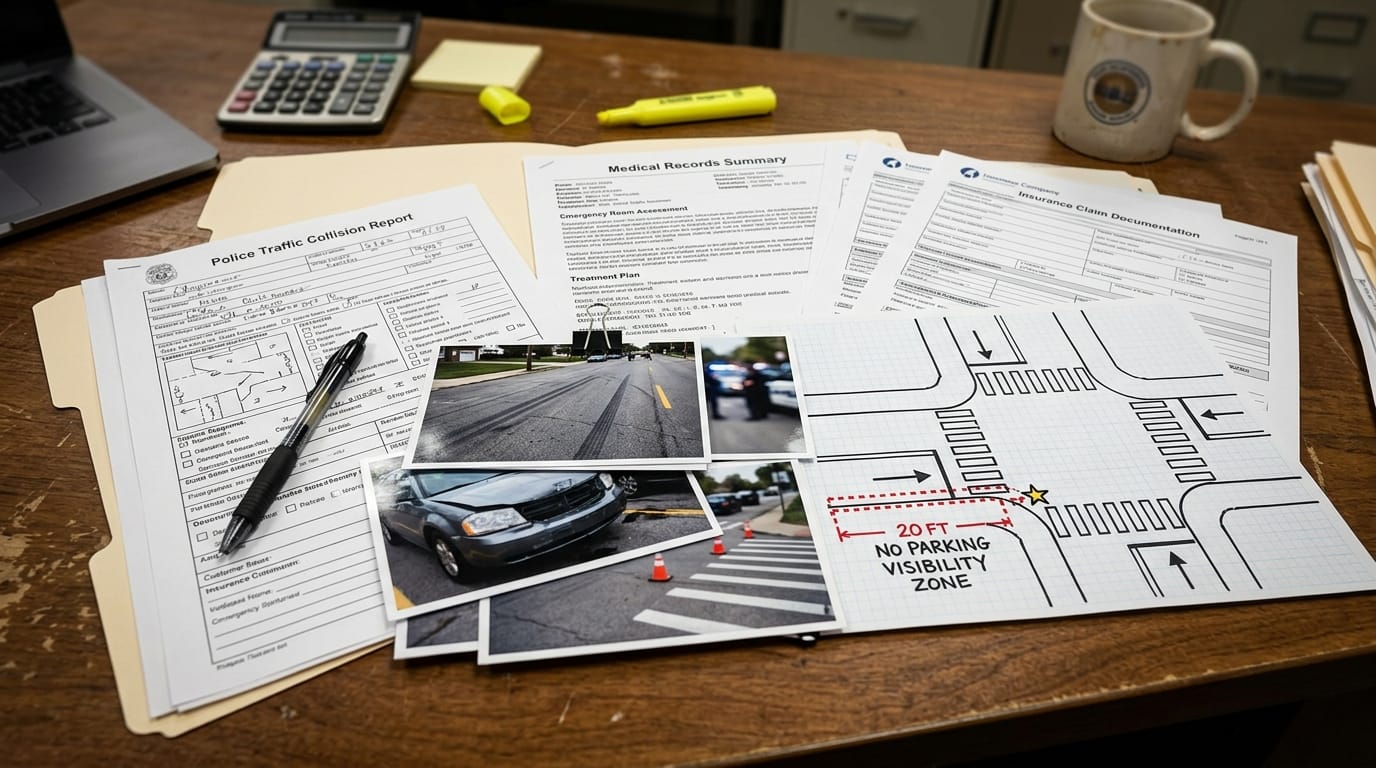
Under California’s daylighting rule, drivers generally may not park within 20 feet of the vehicle approach side of a marked or unmarked crosswalk. When a curb extension or bulb-out exists, the restriction may be 15 feet. The rule can apply even when the curb is not painted red, which means drivers cannot rely only on curb markings.
For official background, readers can review this public explanation of California’s daylighting law from the San Francisco Municipal Transportation Agency: California’s New Daylighting Law. The important takeaway for injury victims is not the parking ticket itself. The important issue is whether blocked visibility helped cause the crash.
Daylighting evidence can help explain what the driver could see
In a Riverside crosswalk accident, photos of the intersection may become very important. A parked vehicle near the crosswalk can change everything. If a large van, truck, or SUV blocked the driver’s view, the crash may involve more than one careless decision.
The injured person should document the exact location, the direction of travel, the crosswalk, the lane layout, and any parked vehicles near the corner. Wide-angle photos, close-up photos, and videos from the pedestrian’s and driver’s viewpoints can help show the sightline problem. If possible, take photos before vehicles move or before the scene changes.
Driver fault still matters in crosswalk cases
Daylighting rules do not erase driver responsibility. Drivers must still watch for pedestrians, slow down when conditions require it, obey traffic signals, and avoid distractions. A driver who approaches a crosswalk too fast may not have enough time to stop, even when the pedestrian is visible.
Driver behavior may include speeding, texting, turning without checking, rolling through a stop, failing to yield, driving impaired, or ignoring poor visibility. These details can support a pedestrian injury claim when the evidence connects them to the crash.
Insurance companies may still blame the pedestrian
Insurance adjusters often look for ways to shift fault. They may argue that the pedestrian crossed outside the marked lines, walked against a signal, stepped out suddenly, wore dark clothing, or looked at a phone. Those arguments do not always defeat a claim, but they can reduce settlement value if the injured person does not have strong evidence.
California uses comparative negligence, so an injured person can still recover compensation even if the insurer claims shared fault. The real issue becomes percentage of responsibility. Clear photos, video, witness statements, and medical records can help push back against unfair blame.
How To Build A Strong Riverside Crosswalk Accident Claim
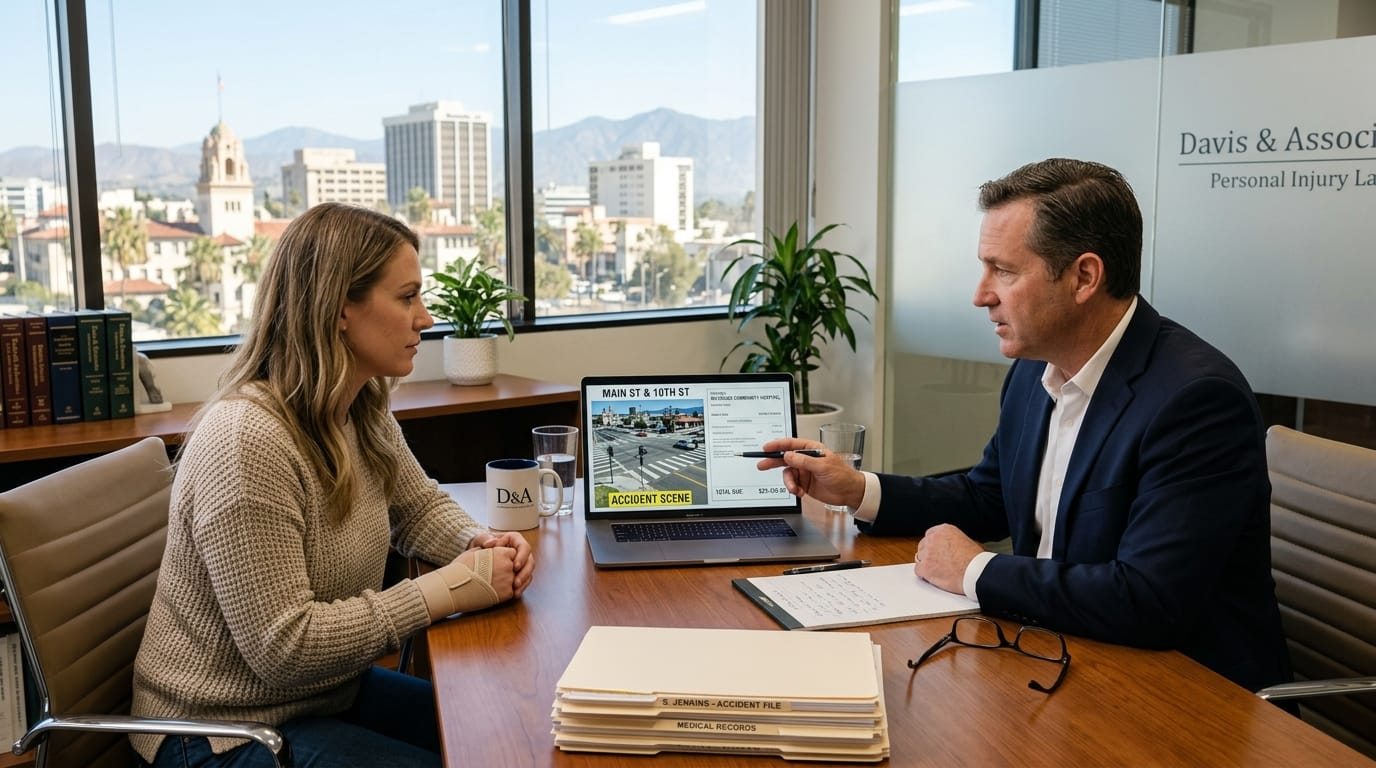
A strong Riverside crosswalk accident claim should connect three things: how the crash happened, why the other party was careless, and how the injuries affected the victim. Crosswalk cases may involve drivers, parked vehicles, commercial delivery vehicles, government road design issues, property owners, or contractors depending on the facts.
Evidence should start at the scene. Take photos of the crosswalk, curb, traffic signs, signals, lane markings, parked vehicles, lighting, skid marks, debris, and impact area. Look for cameras on nearby businesses, homes, buses, rideshare vehicles, or dashcams. Video may disappear quickly, so early action matters.
Medical records are just as important as scene evidence
Pedestrian injuries can be severe because the human body has little protection against a moving vehicle. Common injuries may include fractures, head injuries, back injuries, shoulder injuries, knee injuries, internal injuries, cuts, bruising, and long-term pain. Some symptoms appear immediately, while others worsen after the adrenaline fades.
Medical documentation helps connect the crash to the injury. It also shows treatment costs, physical limits, prescriptions, follow-up visits, therapy, missed work, and future care needs. Riverside Accident Lawyer has a related guide on the importance of medical documentation in personal injury cases, which fits closely with crosswalk claims.
Medical bills and coverage questions should be handled early
After a pedestrian crash, medical bills can arrive before the insurance claim gets resolved. The at-fault driver’s insurer may not pay bills as they come in. Health insurance, Med Pay, provider arrangements, or later settlement reimbursement may all become part of the payment picture.
That confusion can add pressure to settle too early. Before accepting an offer, compare it with the full injury timeline, future treatment needs, missed income, and long-term symptoms. Riverside Accident Lawyer’s article on who pays medical bills after a Riverside car accident explains why payment timing and final compensation are not always the same thing.
Do not ignore UM/UIM coverage after a pedestrian crash
If the driver has no insurance or not enough insurance, the injured pedestrian may need to review uninsured or underinsured motorist coverage. This coverage can sometimes apply even when the injured person was walking, depending on the policy and facts.
That makes policy review important after a serious injury. Do not assume the only available coverage is the driver’s liability insurance. If medical costs are high, the difference between basic coverage and a full recovery can become a major issue. Riverside Accident Lawyer’s post on underinsured driver accident topics can help readers understand why coverage limits matter.
A Riverside crosswalk accident may look simple at first, but the evidence can tell a deeper story. The driver’s speed, parked vehicles near the corner, blocked sightlines, lighting, road markings, traffic signals, and medical documentation can all affect the claim.
If you were injured in a crosswalk crash, get medical care, document the scene, save every record, look for cameras, avoid rushed insurance statements, and review all possible coverage. California’s daylighting law may not decide the case by itself, but it can help identify visibility problems that deserve serious investigation.