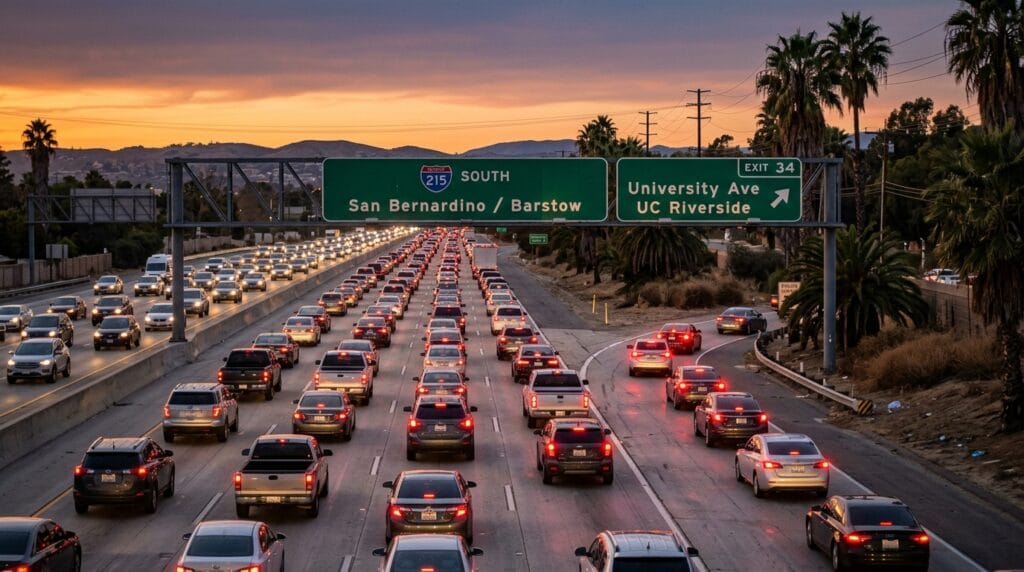
Riverside rear-end crashes can become serious in seconds, especially on fast freeway corridors like the 215. One driver slows down for traffic. Another driver fails to stop in time. A third vehicle hits from behind. What first looks like a simple rear-end collision can quickly become a multi-vehicle injury claim.
Recent crash reports from Riverside show why this topic matters. A three-vehicle crash on the 215 Freeway near Eucalyptus Avenue left a baby dead and several people injured. The crash involved slowed traffic, multiple impacts, trapped occupants, and young children inside a vehicle. That kind of incident raises hard questions about speed, following distance, distraction, child passenger safety, and insurance coverage.
Not every rear-end crash has the same legal answer. Some cases involve one careless driver. Others involve several drivers, unsafe speed, poor reactions, road conditions, defective brakes, commercial vehicles, or limited insurance. When children suffer injuries, the claim can become even more emotional and legally complex.
This guide explains how Riverside rear-end crashes happen, who may be liable, what evidence matters, and why families should act quickly after a serious freeway collision.
Why Riverside Rear-End Crashes Can Become Complicated
Many people assume the rear driver always carries full blame. That assumption is too simple. In many cases, the rear driver did follow too closely, drove too fast, or failed to pay attention. However, California injury claims still look at the facts of the whole crash.
A front vehicle may stop suddenly because of traffic, debris, a hazard, or another crash ahead. A middle vehicle may hit the front vehicle first. Then a third vehicle may strike the middle vehicle and cause more injuries. Each impact can create separate questions about fault and damages.
Freeways make these cases harder. Traffic on the 215, 91, 60, and nearby Riverside routes can shift from fast movement to sudden backups. A safe gap can disappear quickly. Drivers who look down for even a moment may fail to react in time.
Speed, Stopped Traffic, and Following Distance
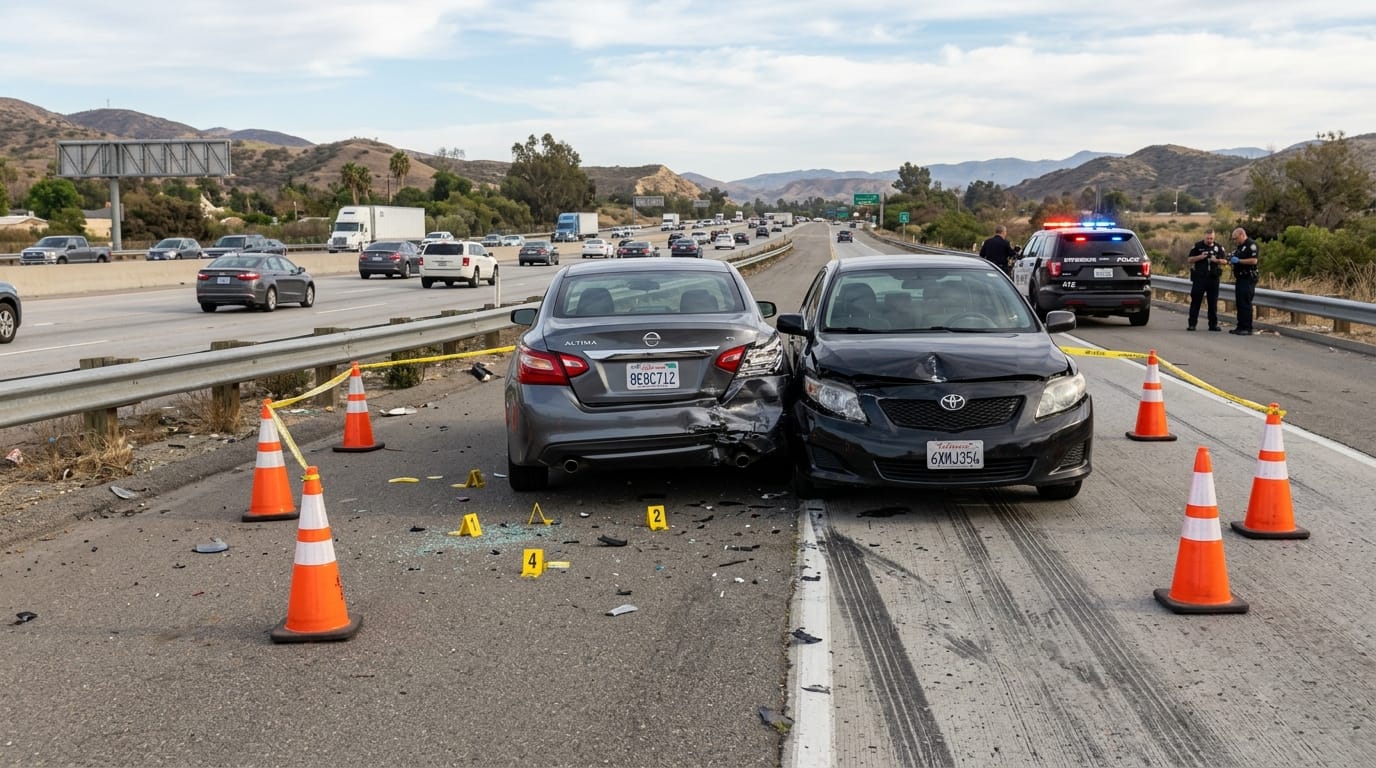
Speed plays a major role in Riverside rear-end crashes. A driver does not need to race to create danger. A driver can cause harm simply by going too fast for traffic conditions. Heavy traffic, night driving, lane merges, construction, rain, glare, or sudden congestion can make a legal speed unsafe.
The California Highway Patrol announced a 2026 speeding enforcement effort because unsafe speed continues to cause serious and fatal crashes across the state. That matters in rear-end cases. If a driver could not stop in time, investigators may ask whether speed or following distance caused the impact.
Following distance also matters. Drivers need enough space to react when traffic slows. Large vehicles need even more space. Trucks, SUVs, vans, and vehicles carrying passengers may take longer to stop. When a driver leaves too little room, a small traffic change can lead to a violent crash.
Rear-End Fault Is Not Always Automatic
The rear driver often faces strong blame, but fault still depends on evidence. A driver may claim the vehicle ahead stopped without warning. Another driver may blame a sudden lane change. A third driver may blame the first two drivers.
Insurance companies use these disputes to delay or reduce payment. That is why crash photos, vehicle damage, police reports, witness statements, and video footage matter. The evidence should show each vehicle’s movement before impact.
Multi-Vehicle Impacts Can Create Multiple Claims
Multi-vehicle crashes can create several insurance claims at once. One injured person may have a claim against more than one driver. A passenger may have a claim against the driver of their own vehicle, another driver, or both.
Each insurance company may try to shift blame. One carrier may say the first impact caused the injuries. Another may say the second impact caused most of the damage. Medical records, repair estimates, crash reconstruction, and witness statements can help connect injuries to each collision.
Child Passenger Injuries After Rear-End Crashes
Child injuries make a car accident claim more serious. Infants and young children cannot explain pain the same way adults can. They may cry, sleep differently, refuse food, move less, or show delayed symptoms. Parents should seek medical care right away after any significant impact.
California law requires children under 2 to ride in a rear-facing car seat unless they meet specific height or weight exceptions. Children under 8 must ride in a car seat or booster seat in the back seat. The California Highway Patrol provides child safety seat guidance and inspection resources for families.
Even when a child sits in the correct seat, a hard freeway crash can still cause injury. A car seat reduces risk, but it does not erase the force of impact. Parents should keep the car seat after a crash and avoid throwing it away before documenting it.
Car Seats Can Become Evidence
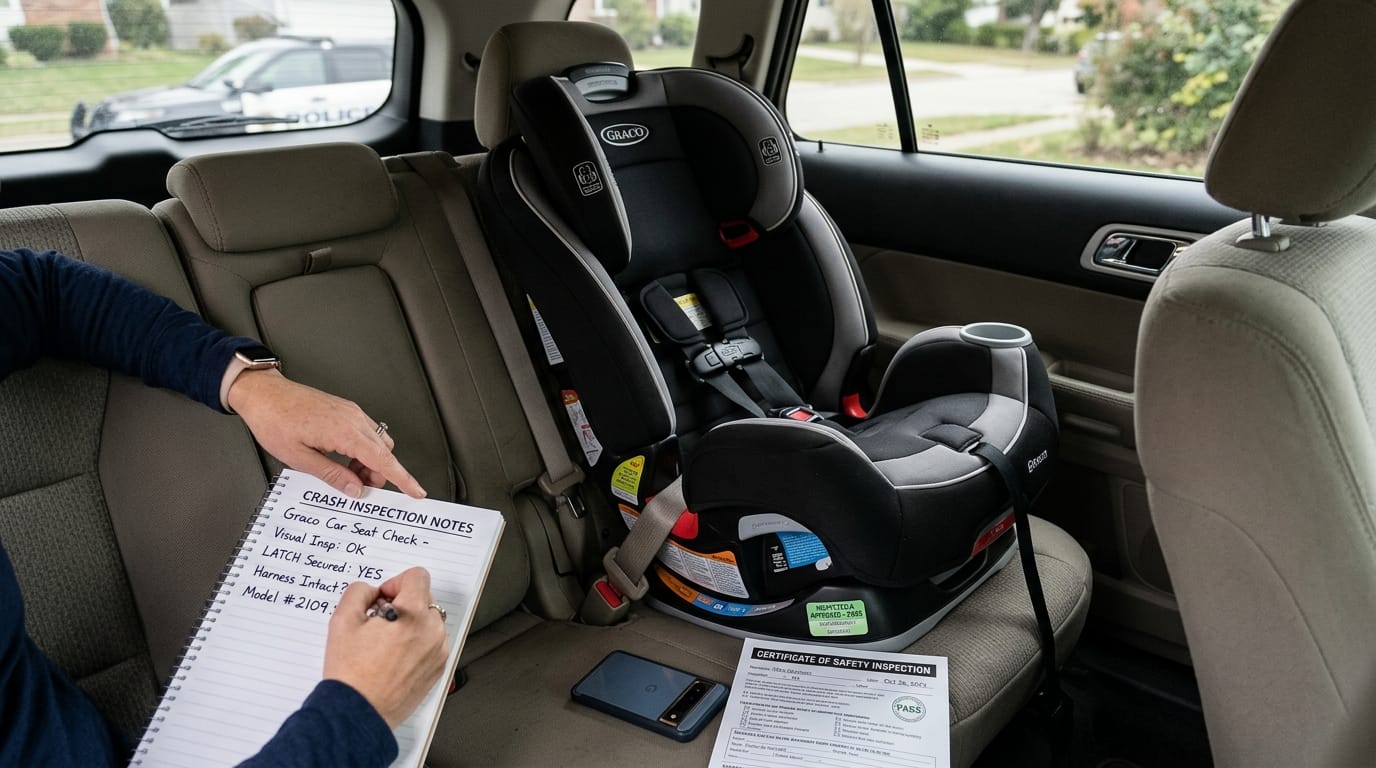
A child safety seat may become important evidence after a serious crash. The seat can show the child’s position, restraint type, harness use, and crash force. It may also help medical providers understand how the child moved during impact.
Parents should photograph the seat, straps, buckles, base, vehicle seat, and surrounding damage. They should also save the car seat manual, purchase record, and model information if available. If the seat has a recall issue or defect, that may add another layer to the claim.
What Injured Families Should Do After a Riverside Rear-End Crash
After Riverside rear-end crashes, medical care should come first. Call 911 if anyone feels pain, loses consciousness, feels dizzy, cannot move safely, or shows signs of injury. Children, older adults, and pregnant passengers need extra caution after hard impacts.
Get checked even if symptoms seem mild. Whiplash, concussion, back injuries, internal injuries, and soft tissue damage can appear later. A medical record also helps connect the injury to the crash. Without early records, insurance companies may question the claim.
Report the crash to law enforcement. A police report can document drivers, passengers, witnesses, vehicle positions, traffic conditions, and possible violations. In a multi-vehicle crash, the report may help explain the sequence of impacts.
Evidence That Can Strengthen the Injury Claim
Good evidence can protect a family from unfair blame. Take photos of every vehicle, not just your own. Capture front damage, rear damage, side damage, airbags, child seats, debris, skid marks, traffic signs, lane markings, and the full crash scene.
Look for cameras nearby. Freeway crashes may involve dashcams, truck cameras, rideshare cameras, business cameras near exits, or traffic footage. Video can show whether traffic had already slowed, whether a driver braked, and whether another vehicle caused the chain reaction.
Witnesses also matter. Ask for names and phone numbers if you can do so safely. A neutral witness can explain whether a driver followed too closely, looked distracted, changed lanes suddenly, or failed to slow with traffic.
Save medical bills, discharge papers, prescriptions, therapy notes, and follow-up instructions. If you are unsure how bills may get paid, review the site’s guide on who pays medical bills after a Riverside car accident. Medical payment timing can differ from final settlement timing.
Families should also review insurance limits early. Serious crashes can exceed basic coverage fast. If the at-fault driver has too little insurance, your own UM/UIM coverage may matter. Your existing guide on underinsured driver accidents in Riverside fits this issue well.
If a truck, delivery van, or work vehicle caused one of the impacts, the claim may involve commercial insurance and company records. In that situation, readers may also want to review truck accidents in Riverside. If the collision happened near a construction zone, your article on Riverside work zone accident claims can help explain added fault issues.
For outside safety guidance, families can review the CHP’s child safety seat information. Drivers can also review the CHP’s speeding enforcement announcement for current safety context.
Final takeaway: Riverside rear-end crashes can involve much more than one driver hitting another. Speed, following distance, distraction, child passenger safety, multiple impacts, and insurance limits can all shape the claim. Get medical care, document the scene, preserve car seat evidence, collect witness details, and review every possible insurance source before accepting a quick settlement.