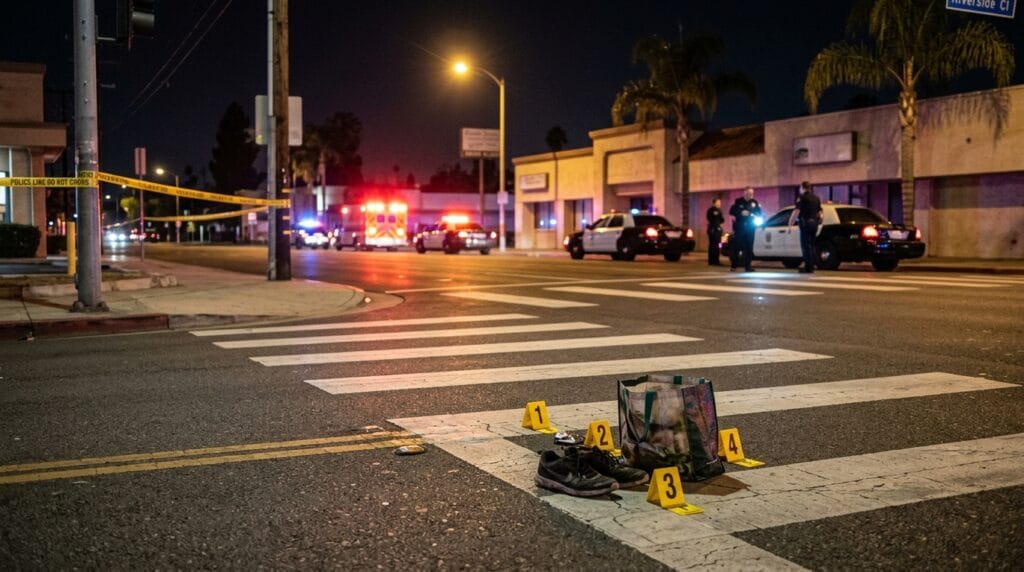
A Riverside nighttime pedestrian claim can become difficult fast. Darkness changes how drivers see the road, how pedestrians judge traffic, and how insurance companies argue fault. A crash that seems clear at the scene may later turn into a dispute over lighting, clothing, crosswalk use, phone distraction, speed, and whether the driver had enough time to stop.
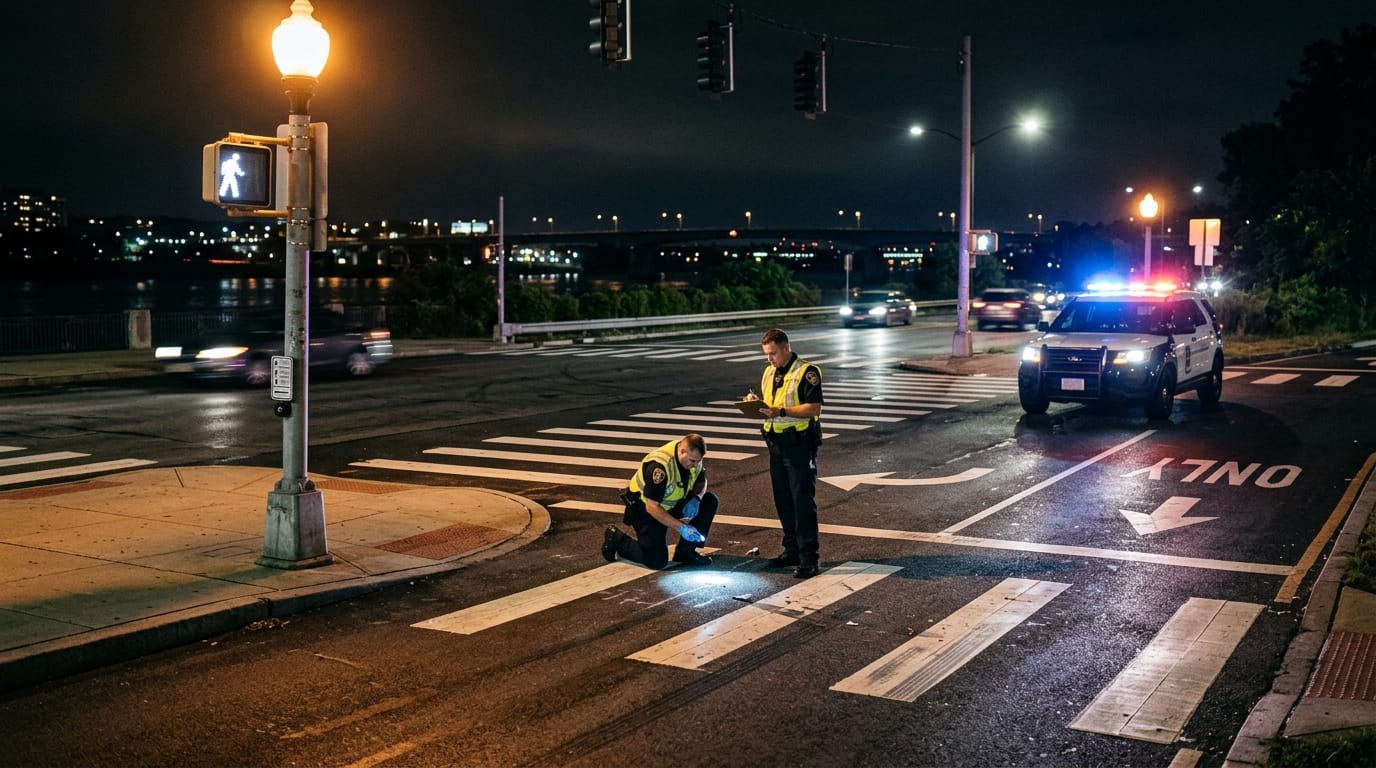
Night pedestrian crashes can happen near crosswalks, shopping centers, bus stops, schools, apartment complexes, entertainment areas, and busy intersections. In Riverside, roads with fast traffic, wide lanes, poor lighting, and heavy turning movement can create serious risk for people walking after dark.
Insurance companies often use darkness as a defense. They may argue that the pedestrian wore dark clothing, crossed too late, stepped outside the crosswalk, looked at a phone, or failed to make eye contact with the driver. Those arguments do not automatically defeat a claim, but they show why evidence matters.
This article is for educational purposes only and is not legal advice. Every pedestrian accident claim depends on the facts, injuries, available insurance, evidence, and legal deadlines.
Why Nighttime Pedestrian Claims Become Evidence Disputes
Nighttime crashes create more uncertainty than daytime crashes. A driver may say, “I never saw the pedestrian.” A witness may remember the crash but not the signal phase. A camera may show movement but not fine details. Streetlights may work on one side of the road but leave shadows near the crosswalk.
That uncertainty gives insurance adjusters room to challenge the claim. They may question who had the right of way, whether the pedestrian entered the street suddenly, whether the driver slowed down, and whether headlights or streetlights gave enough visibility. The injured person needs facts, not guesses.
Riverside County officials recently warned drivers and pedestrians after deadly crashes in the region. The warning emphasized distracted driving, posted speeds, pedestrian right-of-way, and the danger of right turns through active crosswalks. That local context matters because many nighttime pedestrian claims involve the same issues: attention, turning movement, and whether someone had time to react.
Low visibility does not automatically excuse a driver
Drivers must adjust to road conditions. Darkness, rain, glare, shadows, and poor lighting should make a careful driver slow down, scan the road, and prepare to stop near intersections. A driver cannot simply say the pedestrian was hard to see and expect the claim to disappear.
At the same time, pedestrians also need to follow signals, use crosswalks when available, watch for turning vehicles, and avoid stepping into traffic without enough time. California fault analysis can consider both sides. That means evidence can decide whether the driver, the pedestrian, or both share responsibility.
For related reading, see Riverside Pedestrian Accident Claim 2026: Right-Turn Crashes, Distracted Drivers, and Crosswalk Evidence. That post connects closely with nighttime claims because right-turn crashes often happen when drivers focus on traffic instead of the crosswalk.
Common driver excuses after a nighttime pedestrian crash
After a nighttime crash, drivers and insurers may use several defenses. They may say the pedestrian came out of nowhere, crossed outside the crosswalk, ignored the signal, wore dark clothing, or looked down at a phone. They may also blame weather, glare, poor street lighting, or parked vehicles.
Some of these facts may matter. Others may only distract from unsafe driving. The real question is whether a careful driver should have seen the pedestrian and avoided the crash. Speed, braking, signal timing, lighting, and driver attention all help answer that question.
Scene photos should recreate what each person could see
Photos should show more than vehicle damage. Take pictures from the driver’s approach, the pedestrian’s approach, the crosswalk, the curb, nearby signals, streetlights, parking lanes, and any blocked sightlines. Night photos can help show how the scene actually looked when the crash happened.
When possible, take photos at the same time of night and under similar lighting conditions. A scene can look very different at noon. If a streetlight was out, a tree blocked light, or a large vehicle blocked the view, document it quickly.
Right-turn crashes are especially dangerous at night
Right-turn crashes deserve special attention. A driver may look left for traffic, then turn right without checking the crosswalk. At night, that mistake can become deadly. Headlight glare, tinted windows, dark clothing, and poor corner lighting can make the situation worse.
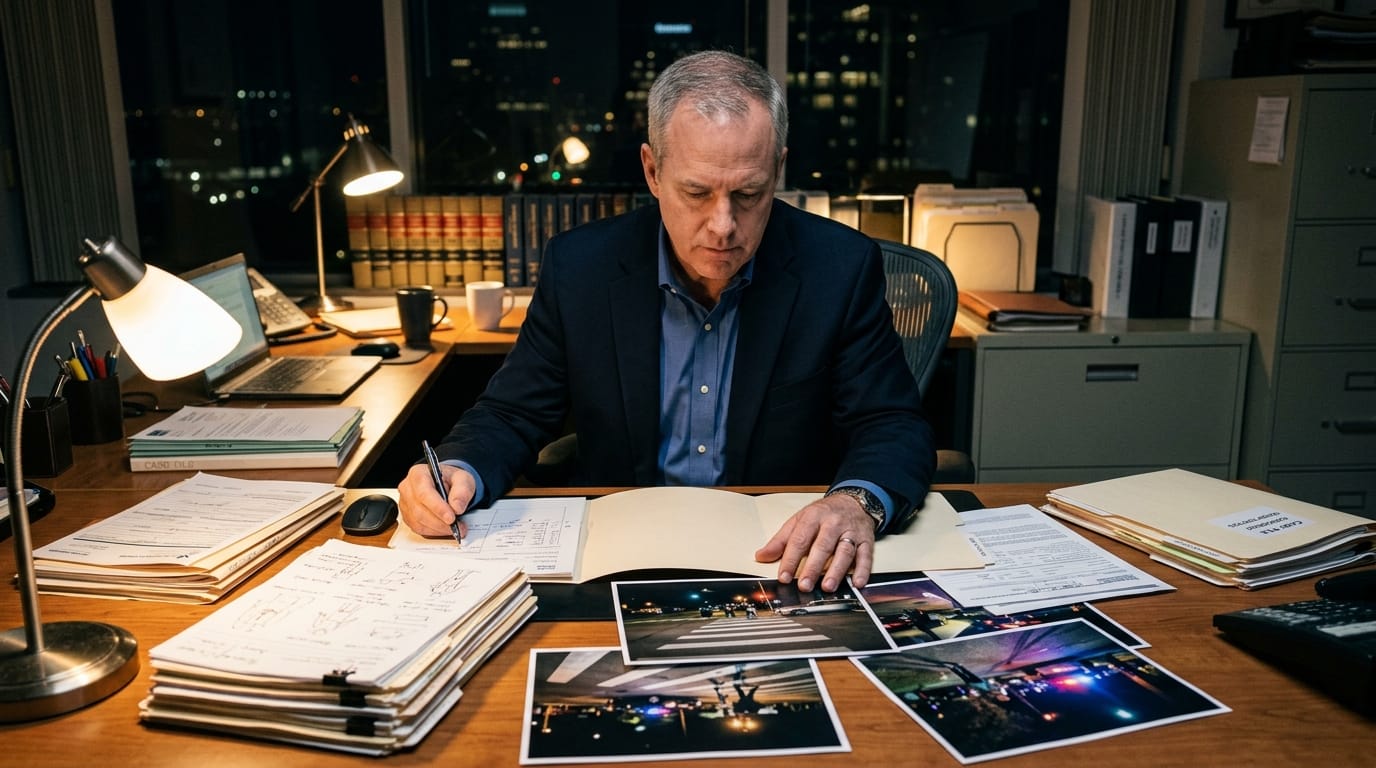
Drivers should stop before turning, check the crosswalk, and yield when required. They should not roll through the turn while watching only for cars. Pedestrians should also look over their shoulder for turning vehicles before entering the crosswalk, even when the walk signal appears.
Your existing article on Riverside Daylighting Law Accident Claim 2026 is a strong internal link for this section. Daylighting and visibility rules matter because parked vehicles near corners can hide pedestrians and reduce a driver’s ability to see the crosswalk.
Signal timing and turn position can change the case
A strong claim should review the signal phase, pedestrian countdown, vehicle speed, turn angle, lane position, and impact point. These details help show whether the driver entered the crosswalk too quickly or failed to yield.
Witnesses can help, but objective evidence often matters more. Nearby businesses, traffic cameras, dashcams, and doorbell cameras may show the light cycle or the driver’s movement. Ask about video quickly because many systems overwrite footage within days.
How to Protect a Riverside Nighttime Pedestrian Claim
The first step after a pedestrian crash is medical care. Call 911, request emergency help, and get evaluated even if pain seems manageable at first. Adrenaline can hide serious injuries. Head trauma, fractures, spinal injuries, internal injuries, and soft tissue damage may become clearer later.
After medical care, focus on documentation. Get the police report number. Take photos. Save clothing and shoes. Keep medical records. Write down pain levels, missed work, mobility limits, and follow-up treatment. If the crash happened near a business, apartment, gas station, restaurant, school, hotel, or bus stop, look for cameras.
NHTSA advises drivers to use extra caution at night or in bad weather because pedestrians can be harder to see and may appear suddenly. It also tells drivers to slow down and prepare to stop when turning or entering a crosswalk. For official safety guidance, see the NHTSA pedestrian safety page.
Insurance companies may try to shift blame to the pedestrian
Insurance adjusters often move fast in nighttime cases. They may ask for a recorded statement before the injured person has medical results, photos, or witness details. They may focus on the pedestrian’s clothing, route, phone use, or crossing point. They may downplay the driver’s speed, distraction, or failure to yield.
Do not guess during insurance conversations. If you do not know the signal timing, say you do not know. If you have not reviewed the police report, say that. Guessing can create problems later. Clear evidence protects the claim better than rushed answers.
Dashcam and vehicle data can also matter. Your guide on Riverside Dashcam and Black Box Evidence in 2026 explains how video, event data recorders, and connected vehicle logs may strengthen a crash claim.
Medical documentation can protect the value of the claim
Medical records connect the crash to the injuries. Delayed care can give the insurer an opening to argue that the injuries came from something else. Follow treatment instructions, attend appointments, and keep copies of bills, imaging results, prescriptions, therapy notes, and work restrictions.
For more background, read The Importance of Medical Documentation in Personal Injury Cases. That article supports a key point: strong injury claims need consistent proof, not just a painful story.

A Riverside nighttime pedestrian claim can involve low visibility, right turns, distracted driving, disputed signal timing, and aggressive insurance defenses. Darkness can make the case harder, but it does not erase a driver’s duty to slow down, watch the road, and yield when required.
If you were injured as a pedestrian at night, act quickly. Get medical care, report the crash, document the scene, look for video, save your clothing, track your symptoms, and avoid guessing when speaking with insurers. The stronger your evidence is, the harder it becomes for the insurance company to blame the darkness instead of the dangerous driving.