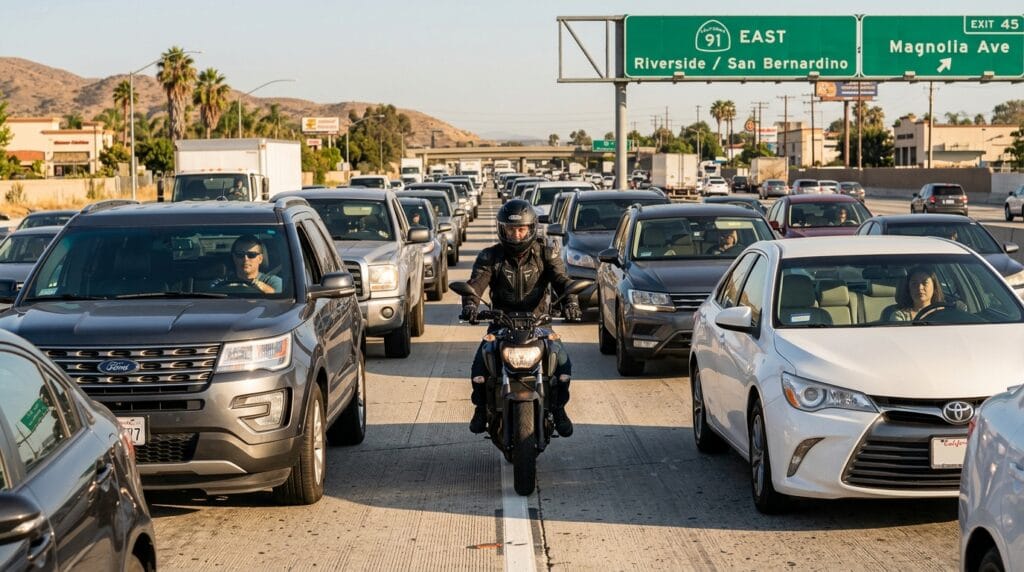
A Riverside motorcycle lane-splitting accident claim can become more complicated than a normal car crash case. Many drivers still misunderstand lane splitting. Some think it is illegal. Others get angry when a motorcycle passes between lanes. That confusion can lead to unsafe lane changes, blocked riders, dooring incidents, sideswipe crashes, and serious injuries.
California law recognizes lane splitting. Under California Vehicle Code section 21658.1, lane splitting means riding a two-wheeled motorcycle between rows of stopped or moving vehicles in the same lane. This can happen on divided and undivided roads. For an official legal source, readers can review California Vehicle Code section 21658.1.
Legal does not always mean safe. Lane splitting can still create fault disputes. A rider may say the driver changed lanes without looking. A driver may say the rider appeared too fast. An insurance company may blame both sides. That is why evidence matters.
In Riverside, this issue can come up on busy routes, freeway slowdowns, commuter corridors, work zones, and crowded intersections. Riders often split lanes when traffic slows. Drivers may check only for cars and miss a motorcycle in the blind spot. One careless move can cause broken bones, road rash, head injuries, spinal trauma, shoulder injuries, knee damage, or permanent disability.
Why Lane-Splitting Accident Claims Are Different
A lane-splitting crash is not always simple. It may involve several moving vehicles, traffic congestion, blind spots, lane markings, speed, and driver reaction time. The crash may happen in seconds, but the investigation should look at the full scene.
The California Highway Patrol explains that lane splitting can be dangerous and requires extreme caution. CHP also warns that danger increases as overall speed rises. Risk also increases when the motorcycle travels much faster than surrounding traffic. CHP provides official motorcycle safety information here: California Highway Patrol motorcycle safety guidance.
Those safety points matter in injury claims. A rider may have the right to lane split, but that does not excuse reckless riding. A driver may dislike lane splitting, but that does not excuse blocking a rider or changing lanes without checking mirrors.
A strong Riverside motorcycle lane-splitting accident claim must answer two questions. What did the rider do? What did the driver do? The evidence should show speed, traffic flow, lane position, visibility, signals, braking, and the point of impact.
Drivers must check mirrors and blind spots
Drivers often cause motorcycle crashes because they fail to see the rider. A quick mirror glance may not be enough. Motorcycles are smaller than cars. They can disappear in blind spots. They can also become hidden behind trucks, SUVs, vans, or other traffic.
Before changing lanes, drivers should signal, check mirrors, check blind spots, and move only when safe. This duty matters even when traffic is slow. In stop-and-go traffic, some drivers drift into another lane without warning. Others make sudden moves because they see a small gap. Those choices can injure a rider who is lawfully passing between vehicles.
CHP also tells drivers that lane splitting is legal in California. It warns that intentionally blocking or impeding a motorcyclist in a way that could cause harm is illegal. It also says opening a vehicle door to impede a rider is illegal. Those details can become important after a crash.
Unsafe lane changes can create strong liability evidence
An unsafe lane change can support a motorcycle injury claim. The evidence may show the driver failed to signal, moved too quickly, crossed into the rider’s path, or entered the gap without checking. The crash damage may also reveal what happened.
For example, damage to the side of a car may suggest a sideswipe. Damage near the front of the motorcycle may show the rider had no time to avoid the vehicle. Skid marks, scrape marks, lane position, and vehicle resting points can also help.
Witnesses can be valuable. Another driver may have seen the car drift across the lane. A passenger may have seen the driver look down. A nearby dashcam may show the lane change from behind. These details can push back when the driver claims the motorcycle “came out of nowhere.”
Blind spots do not excuse careless driving
Drivers sometimes use blind spots as an excuse. They say they never saw the rider. That statement may be true, but it does not automatically remove fault. A blind spot is a known driving risk. Drivers must check before moving.
A motorcycle rider also has responsibilities. Riders should avoid lingering in blind spots when possible. They should consider traffic speed, lane width, weather, lighting, and nearby large vehicles. Still, a driver cannot ignore basic safety rules just because the rider was lane splitting.
In many cases, both sides argue about visibility. Photos, video, and vehicle data can help. Your site already has a strong article on Riverside dashcam and black box evidence in 2026. That internal link fits well because lane-splitting cases often depend on digital proof.
Speed and speed difference can affect fault
Speed is one of the biggest issues in a lane-splitting claim. The rider’s speed matters. The speed of traffic also matters. The difference between the two can shape the fault analysis.
If traffic crawls and the motorcycle passes at a reasonable pace, the rider may have a stronger argument. If the rider moves much faster than traffic, the insurer may argue the rider had less time to react. CHP warns that lane-splitting danger increases at higher speed differences and higher overall speeds.
That does not mean the rider automatically loses the claim. California uses comparative fault. A rider may still recover compensation even if the insurer assigns some blame. The key issue is the percentage of responsibility.
Insurance companies may blame the rider first
Motorcycle claims often face bias. Some adjusters assume riders take unnecessary risks. Lane splitting can make that bias worse. The insurer may argue the rider was speeding, weaving, or passing too closely before it fully reviews the evidence.
A rider should not accept that blame without proof. The driver may have caused the crash by changing lanes suddenly, failing to signal, opening a door, blocking the rider, or drifting into the rider’s path. A claim should look at the whole timeline.
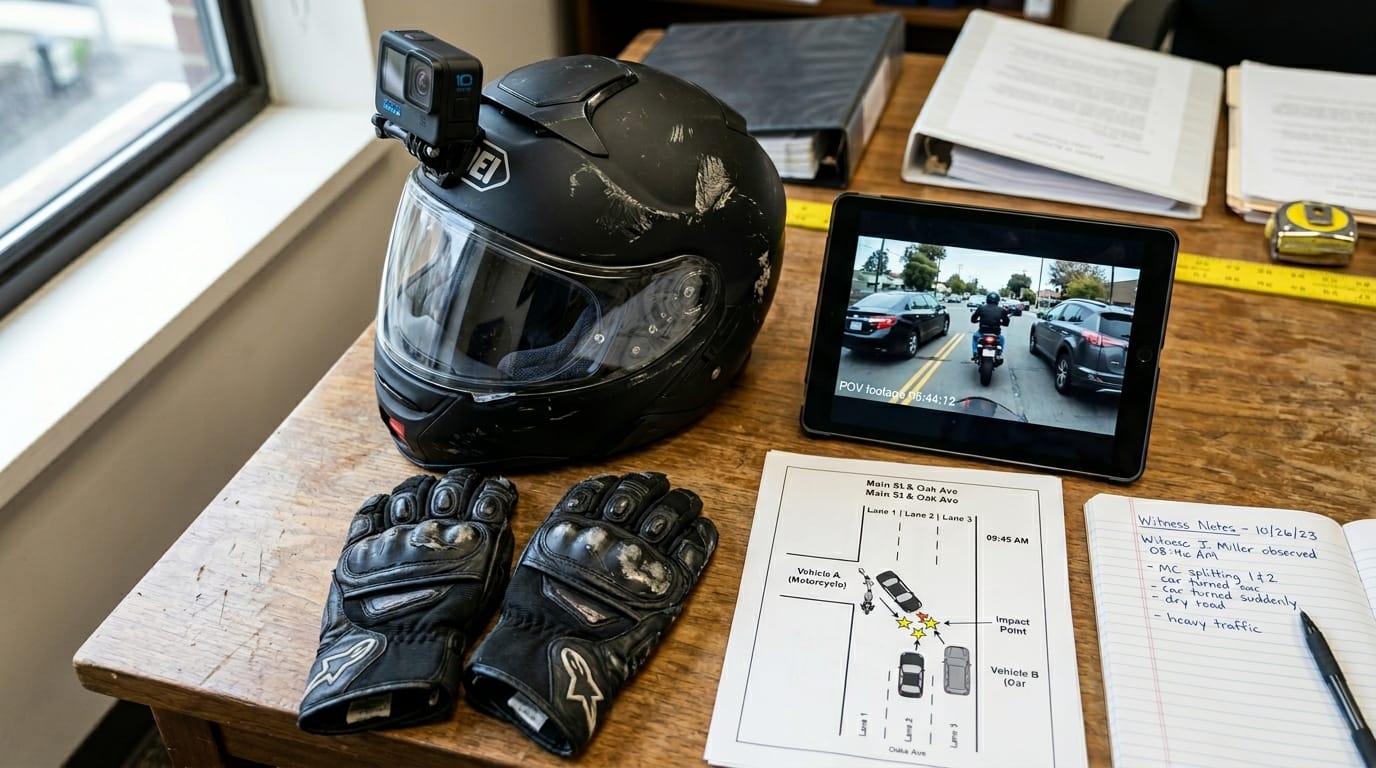
Useful evidence may include dashcam footage, helmet camera footage, traffic camera video, witness statements, police reports, vehicle damage, skid marks, medical records, and motorcycle inspection records. If the crash happened on a freeway or in a work zone, the investigation may also review construction signs, lane shifts, and traffic control.
How to Protect a Riverside Motorcycle Lane-Splitting Accident Claim
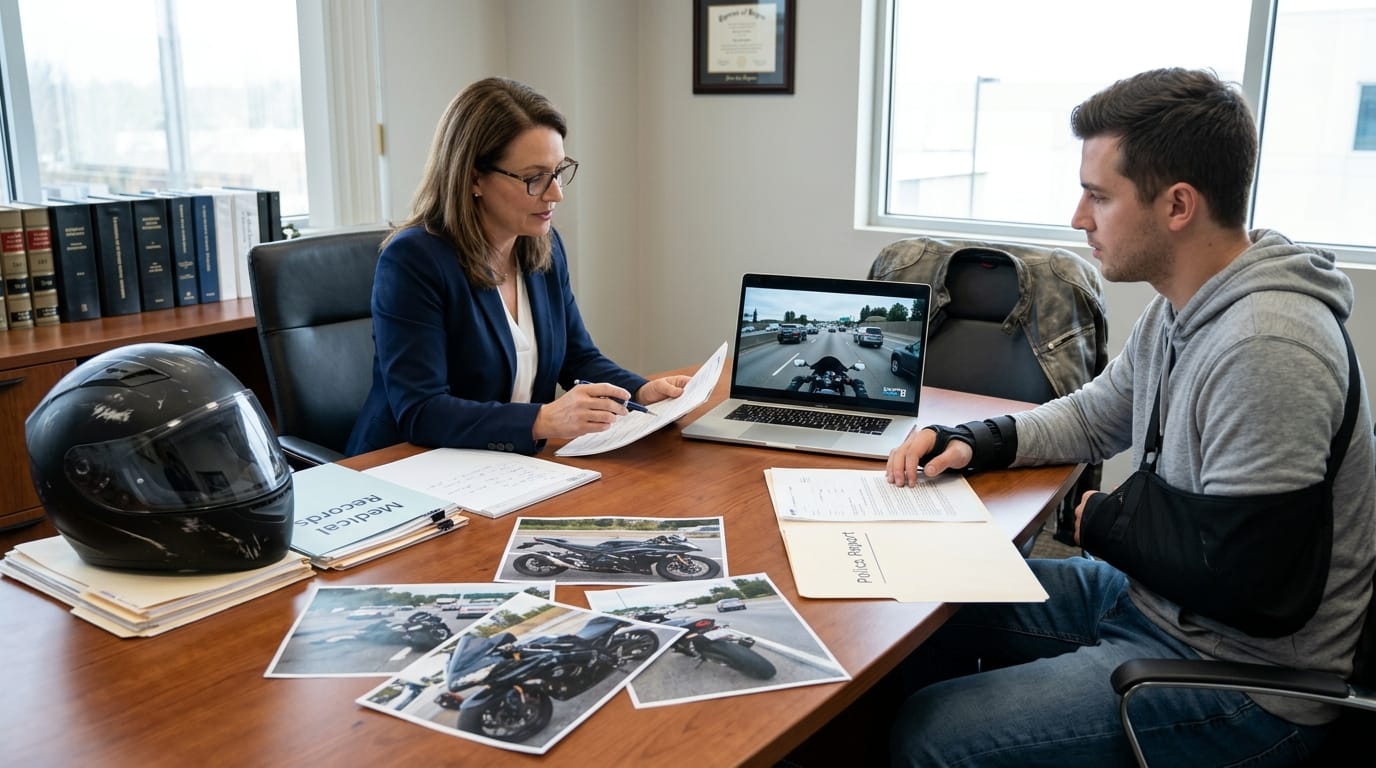
After a motorcycle crash, medical care comes first. Call 911 if the rider has pain, bleeding, dizziness, weakness, confusion, or trouble moving. Motorcycle injuries can look less severe at first because adrenaline hides pain. Later, the rider may feel worse.
Report the crash and get a police report when possible. Explain the lane positions clearly. Mention whether the driver signaled, changed lanes, opened a door, blocked the path, or drifted across traffic. Also describe traffic speed, your direction of travel, and where impact happened.
Take photos if it is safe. Capture vehicle damage, motorcycle damage, lane markings, traffic conditions, mirrors, turn signals, road debris, skid marks, weather, lighting, nearby cameras, and visible injuries. Keep damaged riding gear. Helmets, jackets, gloves, boots, pants, and camera mounts may help prove impact force.
Evidence can decide the outcome of the claim
A strong Riverside motorcycle lane-splitting accident claim connects driver fault, rider conduct, injury proof, and damages. The goal is not only to show that a crash happened. The goal is to show why it happened and how it changed the rider’s life.
Medical records matter. Riders should report every symptom, including head pain, neck pain, back pain, shoulder pain, wrist pain, knee pain, numbness, dizziness, anxiety, sleep problems, and road rash. Follow-up care can also matter. Surgery, physical therapy, imaging, injections, pain care, and specialist visits may increase claim value.
Medical bills can create stress after a crash. Your site already has a helpful article on who pays medical bills after a Riverside car accident. That internal link works here because injured riders often face the same insurance and treatment-payment questions.
Riders should also avoid quick statements. Insurance adjusters may ask whether the rider was going “too fast” or “came between cars suddenly.” Do not guess. Give accurate facts only. Speed, timing, and distance should come from evidence when possible.
Do not settle before future damages are clear
Motorcycle injuries can require long treatment. A broken wrist may affect work. A knee injury may limit walking. A shoulder injury may reduce strength. Road rash may leave scars. A concussion may affect memory, sleep, mood, and concentration.
A fast settlement may not include future surgery, therapy, lost income, reduced earning ability, pain and suffering, motorcycle repairs, gear replacement, or permanent limitations. Once the rider signs a release, the claim usually ends.
Before settling, review the full damage picture. This includes current bills, future care, lost wages, job duties, home limitations, scarring, emotional distress, and long-term mobility problems. A low offer may not reflect the real harm.
California OTS says motorcycle crashes remain a major traffic safety concern in the state. The agency also supports education, training, awareness, helmet use, and enforcement against violations that increase crash risk. That background matters because motorcycle crashes often create severe injuries even at lower speeds.
A lane-splitting crash should not be dismissed as the rider’s fault. California law recognizes lane splitting. Drivers must still check mirrors, signal, respect riders, and avoid unsafe moves. Riders must also use caution and avoid dangerous speed differences.
If you suffered injuries in a Riverside motorcycle lane-splitting crash, protect the evidence early. Get medical care, report the crash, save riding gear, gather witness details, preserve video, and avoid rushed settlement talks. For more claim guidance, visit the Riverside motorcycle accident resources or the Riverside Accident Lawyer services page.