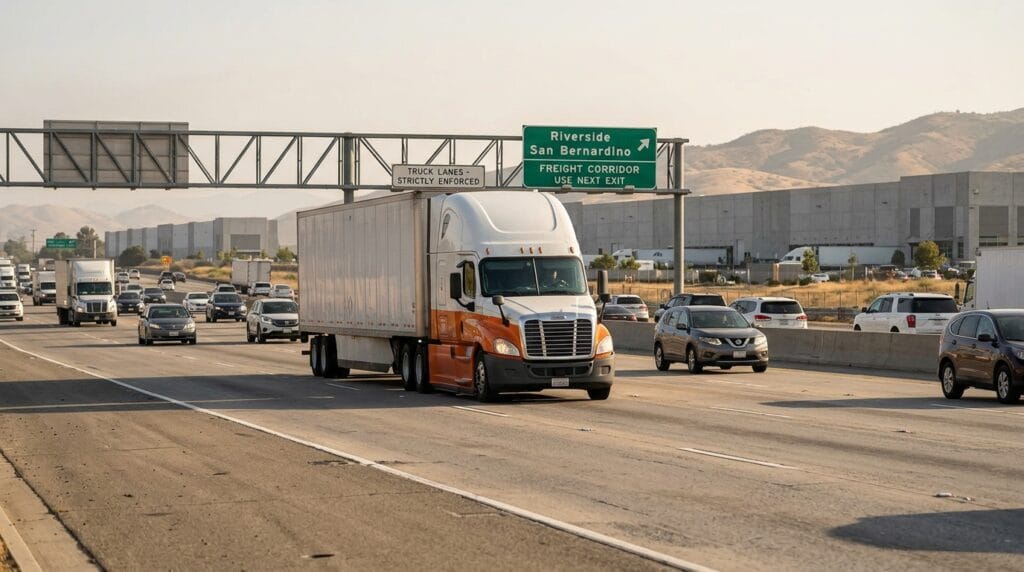
A Riverside truck route accident claim can involve more than a simple question of which driver made a mistake. In 2026, truck route issues matter more because Riverside sits inside one of Southern California’s most important freight and warehouse regions. Heavy trucks, delivery vehicles, warehouse traffic, commuters, school traffic, pedestrians, and cyclists often share the same roads. When a serious crash happens, the route the truck took may become part of the fault investigation.
This does not mean every truck crash is automatically caused by route violations. It also does not mean a truck driver is always at fault. However, the route can raise important questions. Was the truck using an approved freight corridor? Was the driver cutting through a residential area? Was the truck near a warehouse, school, park, or neighborhood street? Did routing pressure, GPS instructions, delivery deadlines, or poor signage contribute to the crash?
These questions are especially important after California’s AB 98 brought new attention to warehouse-related truck routes. The law focuses on logistics use developments and truck routing in warehouse concentration regions, including Riverside County and the City of Riverside. For injury victims, that broader safety context may help explain why truck route evidence should be preserved early.
This article is for educational purposes only. It is not legal advice. Still, it can help injured people understand how a Riverside truck route accident claim may be reviewed, what evidence matters, and why commercial vehicle cases often require fast investigation.
Why Riverside Truck Route Accident Claims Matter in 2026
Riverside is not an ordinary traffic environment. It is part of the Inland Empire, where warehouse activity, freeway freight movement, commuter traffic, and neighborhood roads often overlap. Trucks may move between warehouses, distribution centers, retail destinations, freeway corridors, construction zones, and local roads. As a result, one wrong turn or unsafe route choice can create serious risk.
California’s AB 98 is one reason this issue is trending. The San Bernardino County AB 98 truck routes page explains that the warehouse concentration region includes Riverside County, San Bernardino County, and cities such as Riverside, Moreno Valley, Perris, Jurupa Valley, and others. It also states that truck routes in the warehouse concentration region had a January 1, 2026 adoption deadline. You can review that outside authority here: AB 98 truck route information.
For accident claims, AB 98 does not automatically decide fault. A personal injury claim still depends on the facts of the crash. However, route rules, freight corridors, and warehouse traffic patterns can help frame the investigation. They may show whether a truck was where it should have been. They may also help explain why a roadway was unsafe for the type of vehicle involved.
This topic connects closely with general truck crash liability. If you need broader background, read our guide on truck accidents in Riverside, California. That article explains how driver conduct, trucking companies, maintenance issues, and commercial coverage may affect a claim.
Truck routes can affect the fault investigation
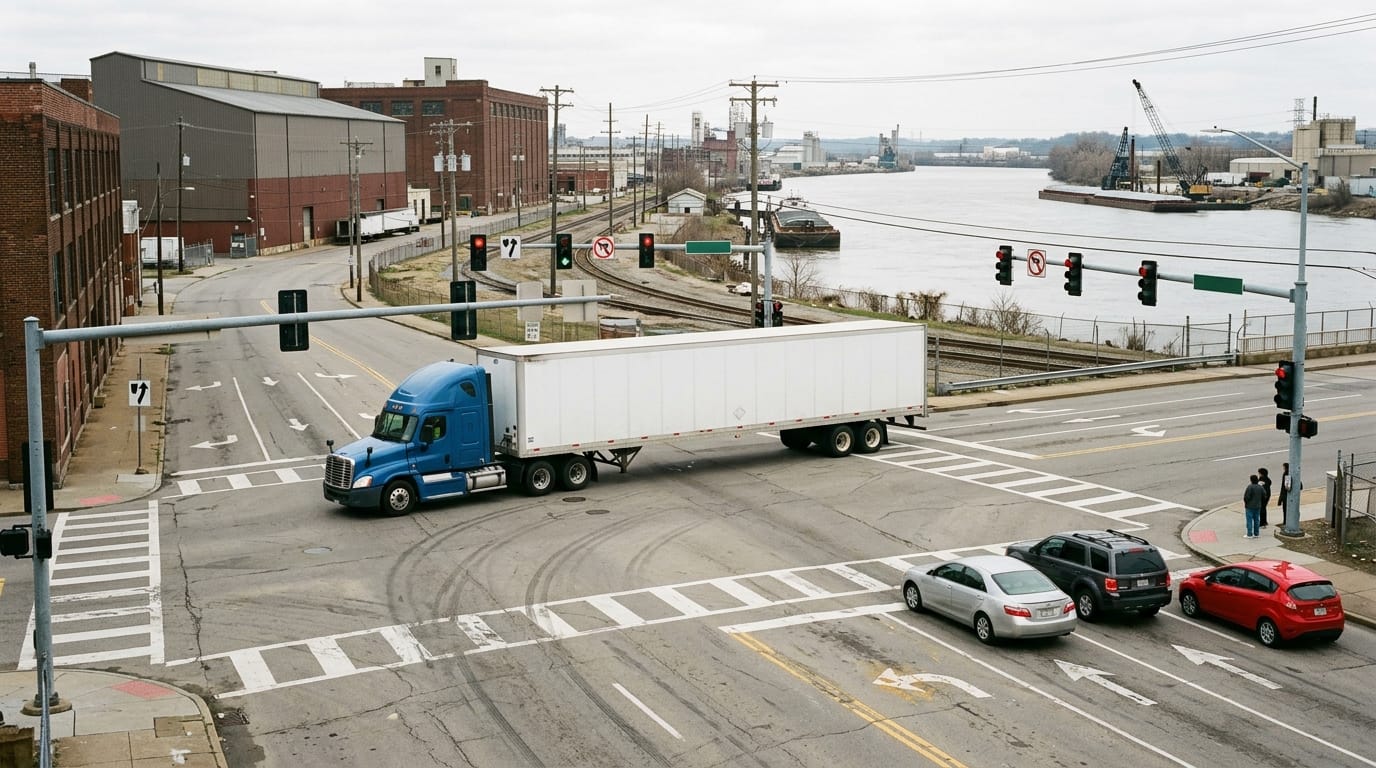
After a serious truck crash, the first story is often too simple. A driver says traffic stopped. A truck driver says a car cut them off. A witness says the truck was moving too fast. However, the route itself may add another layer. Investigators may need to ask why the truck was on that road at that time.
For example, a large commercial truck may create different risks on a narrow residential road than it would on a major freight corridor. A wide turn may endanger nearby vehicles, pedestrians, or cyclists. A truck may need more room to stop. It may also block sightlines near intersections or crosswalks.
That is why truck route evidence can matter. It may show whether the driver followed company instructions, GPS guidance, a local truck route, or an unsafe shortcut. It may also reveal whether a delivery schedule pushed the driver toward a faster but less appropriate route.
AB 98 does not replace crash proof
AB 98 may provide useful context, but it does not replace crash proof. An injured person still needs evidence showing how the collision happened. That may include photos, dashcam footage, police observations, witness statements, truck logs, GPS data, delivery records, and medical documentation.
For example, even if a truck was using a questionable route, the injured person still needs to prove the route mattered. Did the truck have limited room to turn? Was the road too narrow for safe movement? Did the truck block visibility? Did the driver fail to yield, speed, drift lanes, or brake too late? These details decide the claim.
Freight corridors can create repeated risk points
Some truck crashes happen because of one careless decision. Others happen at predictable risk points. Warehouse entrances, freeway ramps, industrial corridors, loading zones, and intersections near distribution centers may see repeated heavy-vehicle movement. Over time, those areas can develop patterns.
If a crash happened near one of these areas, location evidence should be saved. Photos should show lane width, signage, curb design, turn radius, sightlines, nearby driveways, crosswalks, and traffic flow. If the crash happened during a delivery rush or shift change, timing may also matter.
Commercial vehicle evidence can disappear fast
A Riverside truck route accident claim should be investigated quickly because commercial vehicle evidence may not last. Trucks may be repaired, reassigned, cleaned, or moved out of the area. GPS data may be overwritten. Dashcam clips may expire. Dispatch notes may become harder to retrieve. Witnesses may forget details.
Digital proof can be especially important. Many commercial vehicles use telematics, GPS tracking, fleet cameras, event data recorders, driver apps, and route management systems. These records may show speed, braking, route history, stops, delivery timing, and driver behavior before the crash.
Your site already has a strong related guide on Riverside dashcam and black box evidence in 2026. That article pairs naturally with truck route claims because commercial vehicle cases often depend on data that must be preserved before it disappears.
Company records may show why the truck was there
Company records can answer questions that the crash scene cannot. Dispatch records may show the assigned route. Delivery logs may show deadlines. GPS history may show whether the driver stayed on an approved path. Driver messages may show rerouting instructions. Maintenance records may show whether equipment problems contributed to the crash.
These records can also help identify responsible parties. The driver may not be the only person or company involved. Depending on the facts, the trucking company, warehouse operator, broker, maintenance vendor, cargo loader, or another contractor may need review. That is why commercial vehicle claims are rarely as simple as ordinary two-car crashes.
How Injured People Can Protect a Truck Route Accident Claim
The first priority after any crash is medical care. A truck collision can cause serious injuries even when symptoms seem manageable at first. Neck pain, back pain, concussion symptoms, shoulder injuries, knee injuries, and internal injuries may become clearer over time. Therefore, injured people should get checked and follow medical advice.
After that, documentation matters. If it is safe, take photos of the vehicles, truck markings, license plates, company names, roadway signs, skid marks, debris, lane positions, traffic signals, and nearby businesses. Also photograph the surrounding area. In a truck route case, the road itself may become important evidence.
Try to identify witnesses quickly. Other drivers, pedestrians, warehouse workers, nearby residents, delivery employees, or business owners may have seen the truck before the impact. They may know whether large trucks often use that road. They may also know whether the area has repeated near-misses.
If you need a basic crash checklist, review what to do after a car accident in Riverside. The same first steps can help after a commercial truck crash, but truck cases usually need more evidence preservation.
Scene evidence, medical proof, and insurance coverage all matter
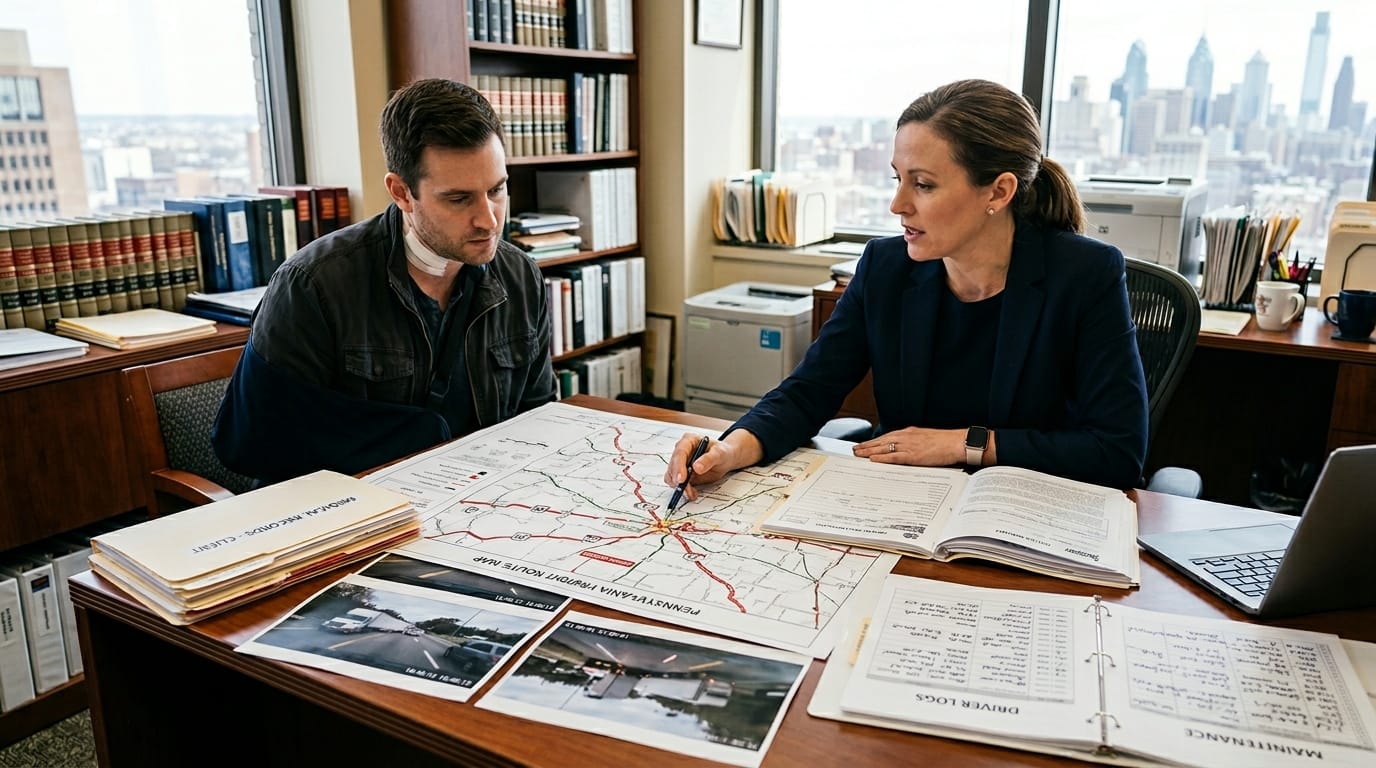
A strong claim usually needs three kinds of proof. First, it needs scene evidence showing how the crash happened. Second, it needs medical proof showing what injuries the crash caused. Third, it needs insurance and company information showing where recovery may come from.
Scene evidence may include photos, measurements, video, route maps, and witness statements. Medical proof may include emergency records, imaging, physical therapy notes, specialist visits, pain records, work restrictions, and future treatment recommendations. Insurance proof may include driver coverage, commercial coverage, employer coverage, and possibly underinsured motorist issues.
This is important because truck crashes can cause losses that exceed ordinary policy limits. If coverage becomes an issue, read underinsured driver accidents in Riverside. That article explains why proving fault is only part of the fight after a serious crash.
Medical documentation is also critical. A strong truck route argument will not help much if the injury records are weak. For more background, read the importance of medical documentation in personal injury cases.
Work zones, warehouses, and route pressure can overlap
Some truck route crashes happen near construction areas, lane closures, or road maintenance zones. In those situations, route evidence may overlap with work-zone evidence. A truck may have been following a detour. It may have entered a narrowed lane. It may have merged late or stopped suddenly near cones, barriers, or a lane shift.
If the crash involved construction or maintenance activity, review Riverside work zone accident claims in 2026. Work-zone cases and truck route cases both depend on fast documentation because roadway conditions can change quickly.
In the end, a Riverside truck route accident claim is about more than the impact itself. It is about why the truck was there, whether the route was appropriate, what the driver and company knew, and what evidence still exists. AB 98 has made truck routing a more visible issue in Riverside and the Inland Empire. However, the strength of any injury claim still depends on the facts.
If you were injured in a crash involving a commercial truck, document the scene early. Save photos, get medical care, identify witnesses, and preserve anything that may show route, speed, braking, company control, or delivery timing. In 2026, truck accident claims are evidence-heavy. The sooner the evidence is protected, the harder it becomes for an insurer or company to rewrite the story later.