
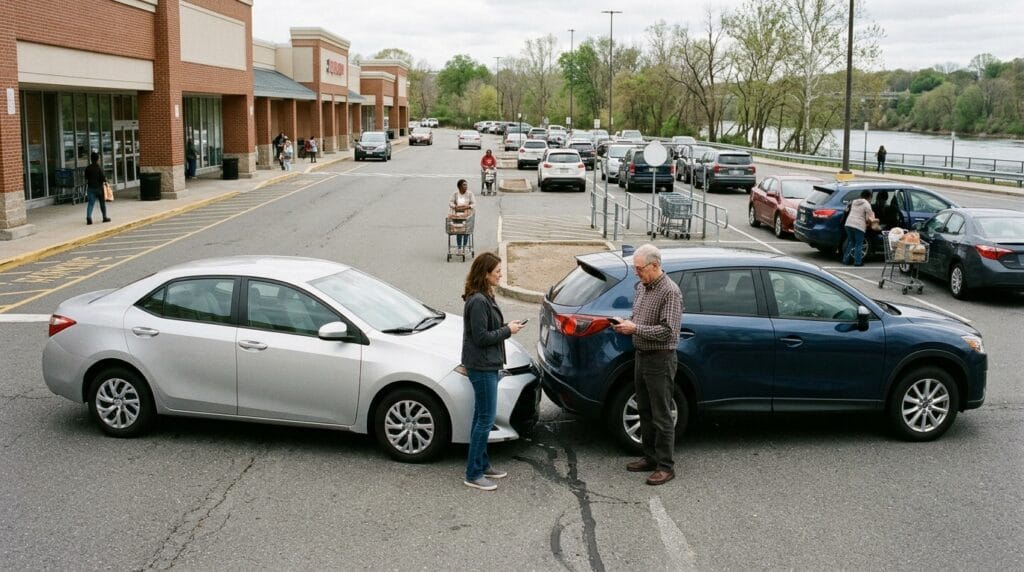
Readers researching Riverside parking lot accident claims need practical distinctions, reliable sources and a clear next step. The answer often depends on the circumstances, what can be verified and which professional or official instructions apply. This car accident guides guide focuses on the decision points people can actually investigate, rather than promising a universal result.
It is easy to focus on an insurer’s first answer or a single legal term, but the useful questions are more specific: what happened, which rules apply, what evidence survives, and what deadlines are approaching? This guide explains the practical distinctions without claiming that the result of any individual case is predetermined.
Why parking-lot collisions are difficult to reconstruct
Riverside parking lot accident claims often turn on a few seconds of movement at low speed. One driver may be backing from a space while another travels through the aisle, or two cars may reverse at once. Without lane markings or a functioning signal, insurers may rely heavily on photographs and statements. The fact that a crash occurred on private property does not automatically resolve fault. An accurate timeline matters more than a dramatic description. Record what was known on the day, what became clear later, and who supplied each piece of information. An insurance position or police summary is not automatically the final legal finding. Keep originals, preserve uncertainty, and do not guess at missing details. For further context, review Riverside Accident Lawyer information.
Parking areas around shopping centers, medical buildings and apartment complexes contain conflicting movements. Pedestrians cross between parked vehicles, carts obscure views, and drivers sometimes treat wide travel aisles as ordinary streets. The location’s layout matters: an aisle serving parking stalls may function differently from the marked main entrance road. Record those details without assuming they establish a right of way. Before relying on any general rule, check which jurisdiction, deadline, coverage agreement, and type of claim actually applies. A useful article should separate a possible legal theory from proof that its elements are satisfied. A legal professional can review whether exceptions or procedural prerequisites change the analysis.
Private property does not eliminate driver duties
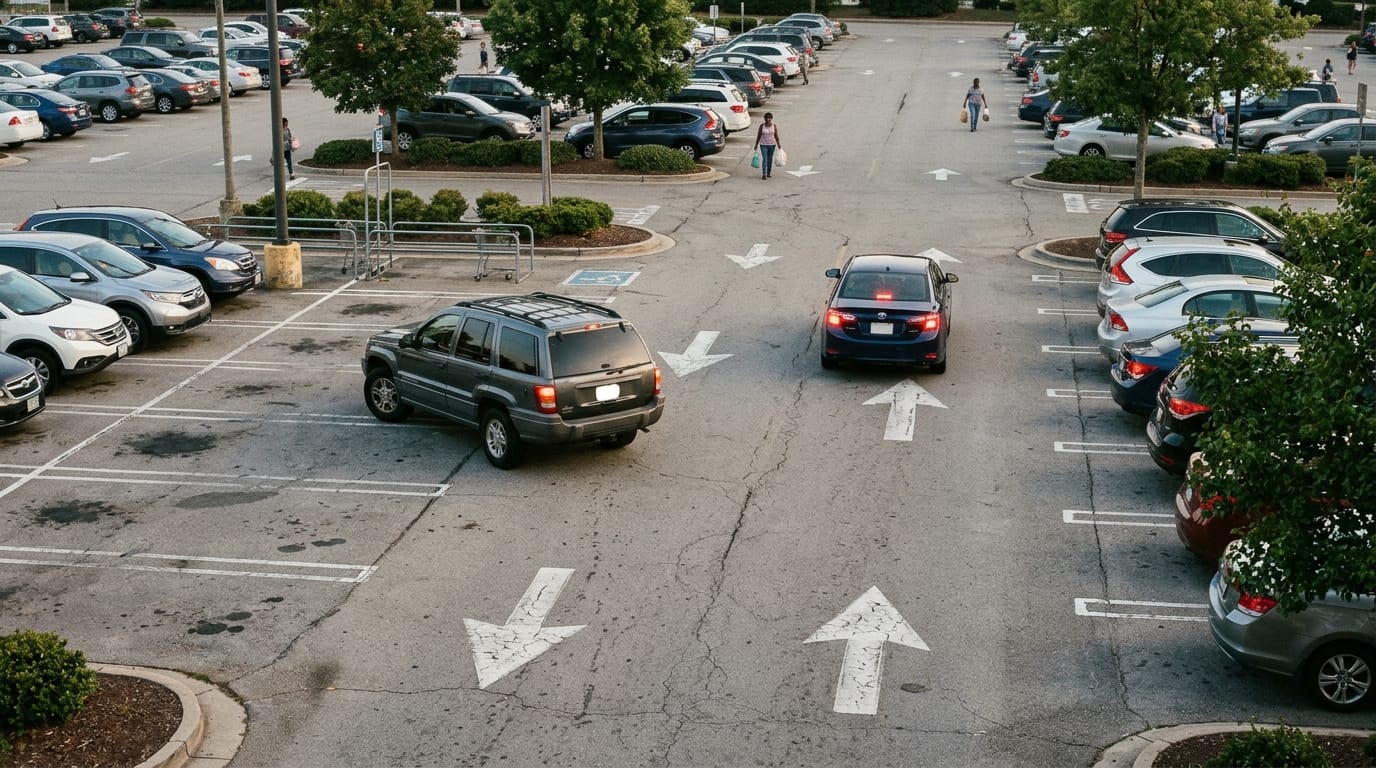
California negligence principles focus on reasonable care under the circumstances. A driver backing from a stall must look and maneuver carefully, but a moving driver also must remain attentive and respond reasonably to foreseeable hazards. Fault can be shared. Insurer labels such as ‘backing accident’ are a starting description, not a substitute for analyzing both drivers’ actions. Build a folder containing dated photographs, correspondence, relevant policy pages, receipts, and a simple index. Save originals separately from annotated copies. A consistent record can help an independent reviewer understand the event without assuming that one screenshot or one witness statement tells the entire story.
Backing vehicles and through-lane drivers
Photograph the exact parking stalls, arrows, stop controls, curbs, and entrance points before vehicles move when it is safe to do so. Take broad views showing the setting as well as close-ups of the damage. A scrape at the rear corner can be interpreted differently from a broad side impact, but damage alone rarely proves the sequence with certainty. Consider what an opposing explanation would look like. Were there multiple contributing causes, conditions that changed over time, or documents pointing in different directions? Testing a claim against those alternatives produces a more reliable picture than choosing the first explanation that feels intuitively correct.
Pedestrians and shared visibility
Businesses may operate security cameras, yet the property owner might not control every camera visible on the premises. Record the approximate time and ask politely who preserves recordings. Do not assume footage will be kept until an insurer requests it. A qualified attorney can evaluate lawful preservation steps if a significant injury or contested case makes it necessary. Avoid sharing sensitive records publicly or submitting unnecessary personal identifiers through unverified forms. Contact organizations through verified channels, document what was requested, and preserve confirmation numbers. Online resources can explain a process, but only a qualified professional who reviews your facts can advise on a particular case.
Shopping-center layouts are sometimes revised during construction or resurfacing. A map captured months later may not show the same arrows, planters or visibility restrictions. Date every photo and ask whether earlier property images exist. That context is especially important when an insurer uses a current map to evaluate an older incident.
Different movements produce different fault questions
Parking lot collisions can injure occupants even when vehicles are moving slowly, especially if a person is older, medically vulnerable, or caught in an awkward impact. Symptoms should be assessed professionally when concerning. Avoid concluding that little visible damage means no injury—or that a later symptom automatically proves the crash caused it. A single day rarely captures the whole consequence of an accident. Treatment may evolve, repairs may reveal hidden damage, and an employer may need updated work restrictions. Maintain dated records without exaggeration, and do not sign a broad release until the financial and legal implications are understood.
Private garages add lighting, ramps and blind corners to the analysis. If a driver exits a ramp into a narrow aisle, record gradients and blocked sight lines. The location can affect how much time each person had to react, but it does not eliminate either driver’s obligation to act reasonably.
Steps after a Riverside shopping-center crash
Exchange accurate insurance and contact details, document the incident, and follow any applicable reporting rules. Whether police respond to a private-property crash depends on circumstances and local practices. A commercial-property incident report can help establish the date, but read it before signing and request a copy when available. When there are conflicting statements, compare their timing and sources rather than labeling one person dishonest. Identify photographs, recordings, electronic records, and independent observations that may resolve the difference. Evidence is strongest when it is preserved lawfully and can be traced to its original source.
Find evidence before it disappears
For a disputed claim, create a short diagram marking vehicles, sight lines and direction of travel. Add witness statements in their own words, and retain any dashcam files with original timestamps. Do not edit the only copy of video. Compare the record against insurance statements and correct errors promptly, without speculating about an unseen driver’s intentions. Write a short list of questions before speaking with a claims handler, agency, or lawyer. Ask which documents are missing, what response deadlines apply, and how decisions will be communicated. Keep a record of the answer and request important explanations in writing when practical.
Photograph lanes, signs and damage positions
Imagine a car reversing from a space while a second driver turns too quickly into the aisle. Both actions may warrant examination. A clear diagram, aisle markings and camera footage could show what each driver could reasonably see. The strongest claim explains the complete interaction rather than arguing that one movement always makes a driver automatically liable. No article can promise a settlement amount or outcome. Legal standards, evidence, insurance contracts, and individual circumstances control the analysis. Use the guidance here as a preparation checklist, and seek case-specific advice before deadlines expire or a final agreement is signed.
Distinguish property damage from medical claims
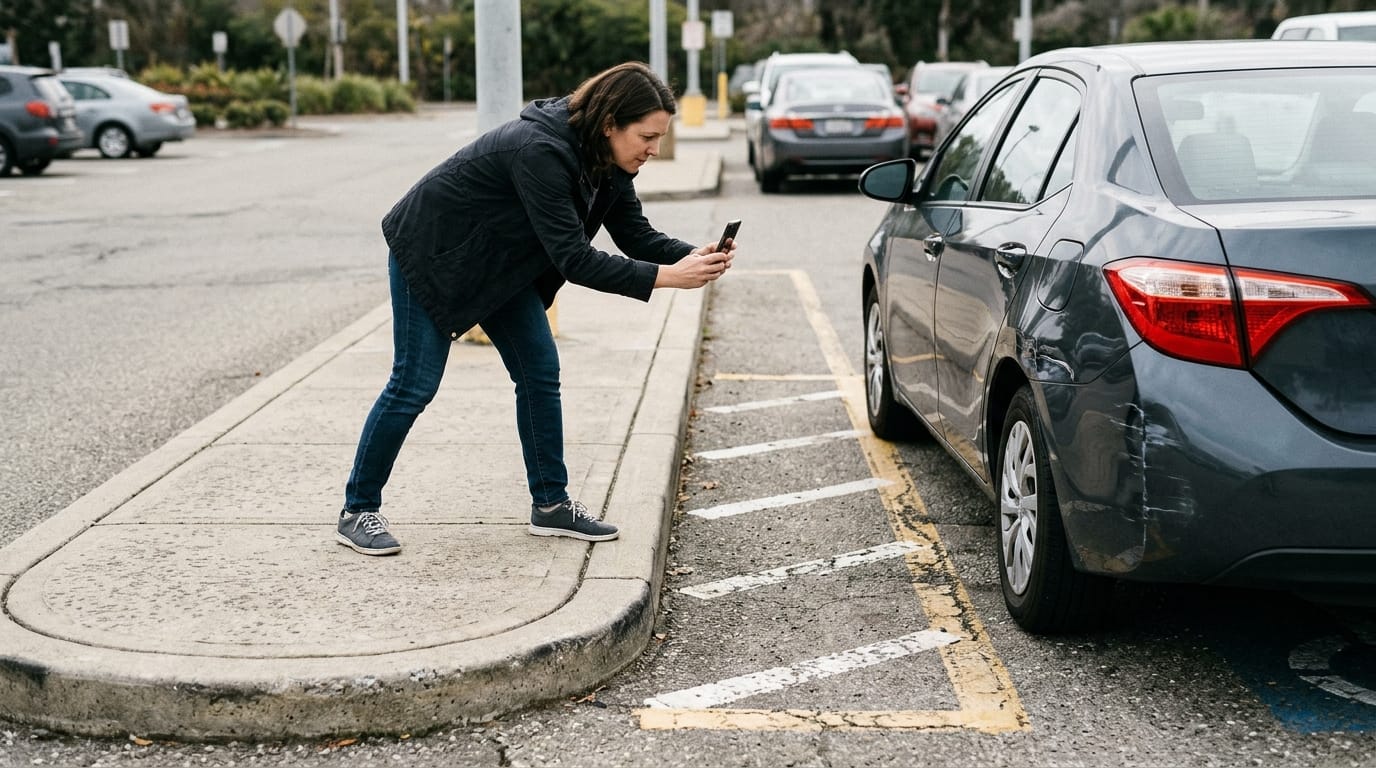
If a pedestrian was involved, avoid treating the case as a typical car-versus-car claim. Identify crossing route, vehicle movement and available warnings; obtain appropriate medical care and prioritize privacy. Statements about pedestrian fault require the same careful review as claims about the driver.
The most persuasive file often includes mundane details: the aisle direction, exact storefront entrance, where a shopping cart obstructed the view and whether a witness was walking or driving. Recording these facts is not about choosing sides immediately. It creates enough context for a fair assessment when memories begin to fade.
Quick reader check: Is the decision based on the correct jurisdiction? Are source documents preserved? Is an important assumption being presented as certain? Which deadlines are confirmed, and which still need verification? These four questions can identify avoidable gaps before an insurer, agency or attorney makes a consequential decision.
For authoritative context, consult California DMV driving safety. Its scope and limitations should be considered alongside the specific facts; the link is not a substitute for professional or local instructions.
The best next step is a clear file and an accurate set of questions. Separate documented facts from assumptions, verify the governing deadlines and seek advice from a qualified professional when legal rights or settlement obligations are at stake. This article is general information, not individual legal advice or an offer of representation.