
After a serious crash, many people assume the hardest part will be proving fault. In reality, another problem often shows up just as fast: the at-fault driver’s insurance may not be enough to cover the damage. That issue matters more than many victims realize, especially in cases involving emergency treatment, missed work, ongoing therapy, or long-term pain. In underinsured driver accidents in Riverside, the fight is not only about who caused the collision. It is also about whether there is enough coverage to pay for what the crash actually cost you.
That is why this topic matters so much in 2026. California increased its minimum auto liability requirements, but higher minimums do not automatically mean full protection in a serious injury case. Medical bills, wage loss, specialist care, future treatment, and pain and suffering can exceed minimum coverage fast. When that happens, injured people often start asking the same question: now what?
This post fits naturally with Riverside Accident Lawyer’s current content. If you are dealing with a crash right now, you should also review What to Do After a Car Accident in Riverside: Step-by-Step Legal Guide, Should I Talk to the Insurance Company After an Accident?, and How Much Is My Car Accident Claim Worth in California?.
What underinsured means after a Riverside crash
An underinsured driver is not the same as an uninsured driver. An uninsured driver has no applicable liability coverage. An underinsured driver does have insurance, but the policy limits are too low to fully pay for the losses they caused. That distinction matters because a victim may still be dealing with the same practical result: not enough money available from the other side to make them whole.
For example, a crash may leave someone with ambulance charges, imaging, orthopedic treatment, physical therapy, lost income, and ongoing pain. Even with California’s updated minimum liability limits, the available coverage can still run out fast in a moderate or serious injury case. That is why many drivers carry uninsured and underinsured motorist coverage, often called UM/UIM coverage.
Why California’s new minimum limits do not solve everything
California now requires more liability coverage than before, which is a real improvement. Still, minimum coverage is exactly that: the minimum. It is not a guarantee that there will be enough insurance to cover the full cost of a crash.
That gap becomes obvious in cases involving multiple injured people, surgery, extended time off work, or long-term complications. A single ER visit and follow-up care can consume a large part of a low-limit policy. Add property damage, lost wages, and future medical needs, and the numbers can move quickly.
That is why underinsured driver accidents in Riverside deserve attention as their own topic. A victim may prove fault clearly and still face an insurance shortfall. Winning the liability fight does not automatically solve the compensation problem.
How UM/UIM coverage may help
Uninsured and underinsured motorist coverage is designed to help when the at-fault driver either has no insurance or does not have enough insurance. In a Riverside injury case, that can become one of the most important protections in the entire claim.
UM/UIM coverage may help bridge the gap between what the at-fault driver’s policy can pay and what the crash actually cost. That can matter in claims involving:
- hospital bills and emergency care,
- follow-up treatment and rehabilitation,
- lost wages or reduced earning ability,
- pain and suffering,
- serious injuries that require longer recovery.
Drivers often do not think much about this part of their policy until after a crash. That is a mistake. In California, many people assume that if the other driver had “insurance,” the claim will be fine. That is not how real accident cases work. Low limits can create major financial pressure even when the other driver technically complied with the law.
How these claims usually become complicated
Insurance companies like clean narratives. Underinsured motorist claims are not always clean. There may be disputes over fault, injury severity, treatment timing, policy language, offsets, or the value of the case itself. Some victims are surprised to learn that their own insurer may still push back hard even when they are making a claim under their own UM/UIM coverage.
That is why documentation matters. In many cases, the strength of the claim depends on how well the victim can show:
- how the crash happened,
- why the other driver was at fault,
- what injuries were caused by the collision,
- how much treatment was necessary,
- how the losses exceed the available liability limits.
This is also where your medical file becomes critical. For more on that, read The Importance of Medical Documentation in Personal Injury Cases.
What to do after a crash if you suspect low limits are involved
1. Get medical care quickly
Your health comes first, but prompt treatment also creates a cleaner record of what the crash did to your body. Delays give insurers room to argue that your injuries were minor or unrelated.
2. Report the collision and preserve the basics
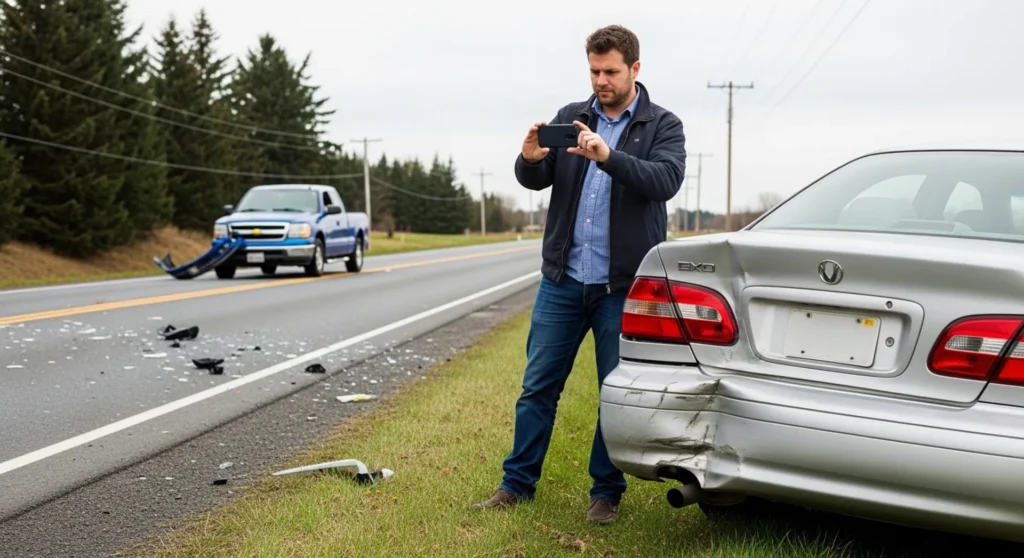
Photograph the vehicles, roadway, damage, debris, traffic signs, and visible injuries. Get names and contact information for witnesses. Keep copies of towing records, repair estimates, and crash-related receipts.
3. Review all available insurance policies
Do not assume the only policy that matters is the at-fault driver’s. Your own policy may contain uninsured or underinsured motorist coverage. There may also be household policies, employer-related coverage, or additional layers of insurance depending on the facts.
4. Be careful with recorded statements
Insurance adjusters often sound casual, but their job is still to protect the company’s position. Stay factual. Do not guess. Do not downplay your symptoms just because you are trying to be polite.
5. Do not settle too early
A fast settlement may look attractive when bills are piling up, but early numbers are often built around incomplete treatment records and an incomplete understanding of future losses.
Why Riverside drivers should take this seriously now
This is not a niche problem. California still has a meaningful uninsured-driver problem, and many insured drivers still carry relatively low limits. That combination puts injured victims in a weak position unless they understand how coverage works and move quickly after a crash.
Riverside also continues to focus on roadway safety planning, including its local roadway safety efforts and Vision Zero-related planning discussions. That reflects a bigger reality: serious crashes remain a live issue locally, and insurance questions remain central after those crashes happen. Better planning may help reduce collisions over time, but it does not erase the coverage gap victims can face right now.
If your case involves a truck, rideshare vehicle, or more complicated liability picture, the insurance issues can become even more layered. Related posts like Truck Accidents in Riverside, California: Causes, Liability, and Legal Options and When Self-Driving or Rideshare Cars Crash: Navigating Liability in Riverside 2025 help round out those scenarios.
Common mistakes that weaken underinsured motorist claims
- Assuming minimum insurance is enough. It often is not in a real injury case.
- Waiting too long for treatment. Gaps in care hurt credibility.
- Failing to review your own policy. UM/UIM rights may exist even when the other driver’s limits are low.
- Giving overly broad statements. Casual comments can be used against you later.
- Settling before the medical picture is clear. Once the case closes, reopening it is difficult or impossible.
- Ignoring DMV reporting requirements. Some crashes require separate reporting beyond police and insurance notice.
How comparative negligence can still affect the case

Even when the other driver’s policy is clearly too small, the insurer may still argue that you were partly at fault. California’s comparative negligence rules can reduce recovery based on your share of responsibility. That makes evidence even more important. Photos, witness statements, vehicle damage, and medical records all work together to protect the value of the case.
For more on that issue, see Understanding Comparative Negligence in California – How It Affects Your Accident Claim.
Final thoughts
Underinsured driver accidents in Riverside are a real problem because proving fault is only half the battle. The other half is whether enough insurance exists to cover the real cost of the crash. California’s higher minimum limits are better than the old ones, but they still may not go far enough once serious injuries, time off work, and future care enter the picture.
If you suspect the at-fault driver’s policy is too small, do not treat that as a minor insurance detail. It can shape the entire claim. Get treatment, preserve the evidence, review every policy that may apply, and take deadlines seriously. That is how you avoid letting a coverage problem turn into a much bigger financial problem.