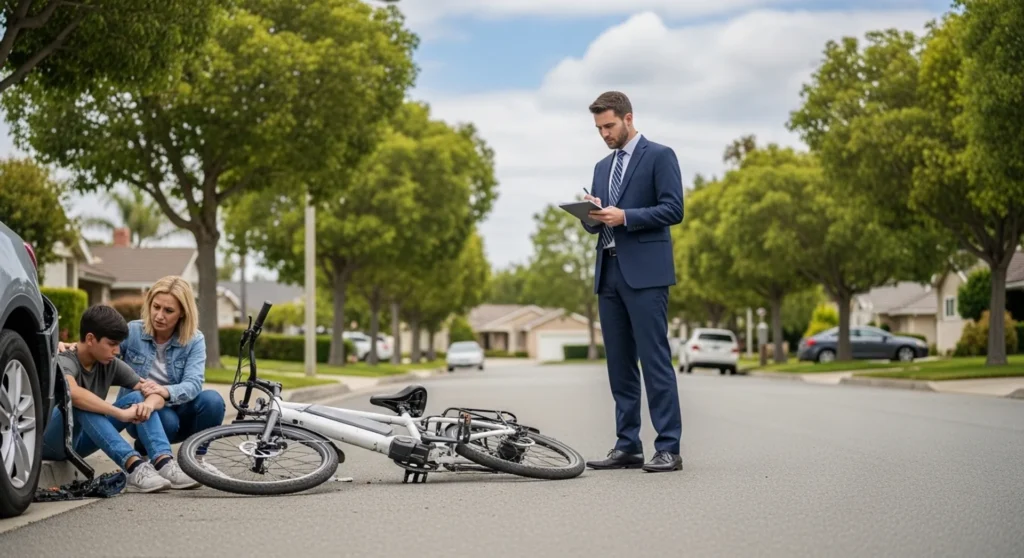
E-bikes are no longer just a trend in Riverside County. They are now a major safety issue for families, drivers, pedestrians, and injury victims. What started as a convenient way for teens to get to school, visit friends, or ride around the neighborhood has turned into a serious legal problem across Southern California. When a child or teenager is injured in an e-bike crash, the case is rarely simple. Questions about speed, safety gear, supervision, local riding conditions, and insurance can all affect who is held responsible.
That issue became even more important after Riverside County authorities publicly warned parents that they could face liability when minors use e-bikes recklessly. At the same time, California’s 2026 e-bike safety rules tightened equipment requirements and added more attention to rider safety. For injury victims and their families, this means one thing: e-bike accidents involving minors are becoming more legally complicated, not less.
If your child was hurt in an e-bike crash in Riverside, or if your family is dealing with a claim involving a juvenile rider, here is what you need to know.
Why Juvenile E-Bike Accidents Are a Bigger Issue in Riverside County

Riverside County is a natural place for e-bike use to grow. The area has sprawling neighborhoods, school routes, parks, shopping centers, and roads where teens often use bikes as an alternative to relying on a parent for transportation. The problem is that many young riders do not fully understand traffic laws, braking distances, roadway hazards, or how fast some e-bikes can really move.
That creates a dangerous mix. A younger rider may treat an e-bike like a toy, while the law and the roadway treat it more like a serious vehicle. When a crash happens, the injuries can be severe. Even worse, the legal fallout can extend beyond the child and directly affect the parent or guardian.
What Changed in 2026 for California E-Bikes?
California’s e-bike rules matter in any accident claim because they shape how insurers, attorneys, and courts look at rider behavior. Beginning in 2026, California added stronger equipment requirements for e-bikes, including rear visibility requirements that apply at all times. These rules are part of a broader effort to address the growing number of e-bike safety concerns across the state.
That matters because an injury claim is not just about who got hurt. It is also about whether the bike was compliant, whether the rider was following the law, and whether a missing safety feature could become part of the fault analysis.
Understanding E-Bike Classes in California
Many parents buy an e-bike without realizing that not all of them are treated the same under California law. In general, California recognizes three classes of electric bicycles.
Class 1
A pedal-assist e-bike that stops providing assistance at 20 miles per hour.
Class 2
An e-bike that can propel itself without pedaling and is also limited to 20 miles per hour.
Class 3
A pedal-assist e-bike that can assist up to 28 miles per hour and comes with additional restrictions, including helmet rules and age-related requirements.
This classification matters because some families think they bought an ordinary e-bike when in reality the device may be too powerful for the rider, improperly modified, or closer to a motor-driven vehicle than a typical bicycle. After a crash, those details can become central to the case.
Can Parents Be Liable for a Minor’s E-Bike Crash?
Yes, in some situations they can. That does not mean every parent is automatically responsible for every crash, but it does mean liability is a real issue when minors are involved.
In a civil injury case, a parent may face scrutiny if they knowingly allowed a child to use an e-bike that was unsafe, unlawful, improperly modified, or clearly inappropriate for the child’s age and experience level. If the crash injured the child, another rider, a pedestrian, or a driver, attorneys and insurers may examine whether the parent failed to supervise, ignored obvious risks, or provided access to a bike that should not have been used that way.
That issue becomes even more serious when there is evidence of reckless riding, prior warnings, or a pattern of unsafe behavior. In those situations, the legal focus can shift from a simple accident to a broader question of preventable harm.
Who Can Be Liable in a Riverside E-Bike Accident?
One of the biggest mistakes people make is assuming liability always falls on one person. In reality, an e-bike accident claim can involve several different parties.
1. A Negligent Driver
A motorist may have failed to yield, made an unsafe turn, opened a car door into the rider’s path, or simply failed to see the rider in time. Drivers still owe a duty to watch for bikes and other vulnerable road users.
2. The E-Bike Rider
If the rider ignored traffic signals, rode unpredictably, traveled too fast for conditions, or crossed unsafely, comparative fault may reduce recovery.
3. A Parent or Guardian
If the rider is a minor, questions of supervision, permission, equipment choice, and prior knowledge may come into play.
4. The Manufacturer or Seller
If the bike had defective brakes, a battery problem, faulty throttle response, poor labeling, or misleading speed claims, a product-related case may exist.
5. A Public Entity or Property Owner
Unsafe roadway design, bad pavement, obstructed visibility, missing signage, or poorly maintained paths can also contribute to a crash.
Common Injuries in Juvenile E-Bike Accidents
E-bike crashes are not minor just because the rider is young. In many cases, the injuries are serious because the rider has little protection and may be thrown onto pavement, into a vehicle, or into another cyclist or pedestrian.
- Head injuries and concussions
- Broken arms, wrists, and collarbones
- Leg fractures
- Facial injuries and dental trauma
- Road rash and lacerations
- Spinal and back injuries
- Internal injuries in severe impacts
These injuries often lead to emergency treatment, follow-up care, physical therapy, missed school, missed work for parents, and long-term recovery concerns. That is why every medical visit, diagnosis, and treatment recommendation should be documented carefully.
You can internally link that point to The Importance of Medical Documentation in Personal Injury Cases.
What To Do After a Juvenile E-Bike Accident
The first few hours after the crash matter a lot. Families often focus only on immediate medical needs, which is understandable, but the legal side also needs attention quickly.
Get medical treatment right away
Even if the injuries look minor at first, symptoms can worsen later. Immediate care protects both health and the claim.
Call law enforcement
A police report can help preserve basic facts, scene details, and witness statements.
Photograph the scene and the bike
Take pictures of the e-bike, the roadway, any involved vehicle, visible injuries, traffic signs, lane markings, crosswalks, helmets, and damage.
Do not repair the bike yet
The bike itself may become evidence, especially if speed capability, mechanical failure, or classification is disputed.
Get witness information
Neutral witnesses can be critical when fault is contested.
Be cautious with insurance adjusters
Insurers often move fast to shape the story. A parent should avoid guessing, speculating, or minimizing the injuries before all the facts are clear.
This section can link naturally to What to Do After a Car Accident in Riverside, Top 5 Steps to Take Immediately After a Car Accident in Riverside, and Should I Talk to the Insurance Company After an Accident?.
How Comparative Negligence Can Affect Compensation
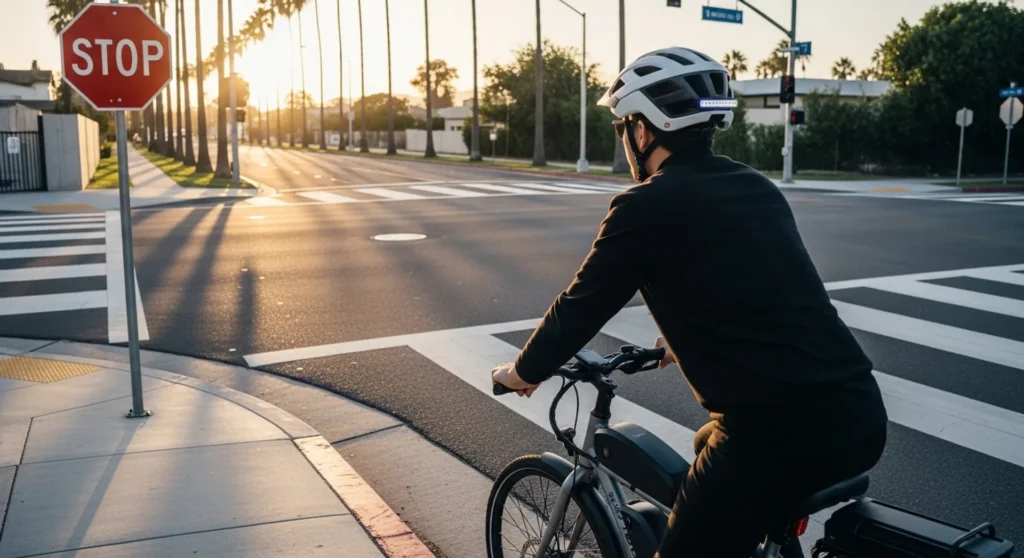
California follows comparative negligence rules. That means an injured person may still recover compensation even if they were partly at fault. In an e-bike case, that could matter if the rider was moving too fast, failed to stop, or was not using required safety equipment, but another driver still acted negligently.
Insurance companies like to use comparative fault aggressively in these cases. They may argue that the youth rider caused the whole crash. That is exactly why a detailed investigation matters. Fault should be based on evidence, not assumptions about young riders.
You can link that discussion to Understanding Comparative Negligence in California – How It Affects Your Accident Claim.
What Damages May Be Available?
Depending on the facts, a Riverside e-bike injury claim may include compensation for medical bills, future treatment, pain and suffering, emotional distress, lost wages for a parent handling care needs, and other accident-related losses. In more serious cases, long-term disability or future care costs may also become part of the claim.
Families often underestimate the real value of these cases early on, especially when insurers try to frame the accident as a simple bike mishap. It is usually not that simple.
This section can also support an internal link to How Much Is My Car Accident Claim Worth in California?.
Final Thoughts
Juvenile e-bike accidents in Riverside County are becoming a bigger legal issue for a reason. The bikes are faster, the risks are higher, and both state and local officials are paying closer attention. For families, that means these cases can involve more than an injury claim. They may also involve questions about supervision, compliance, and whether the bike was safe and lawful in the first place.
If your child was injured in an e-bike accident, or if your family is facing a claim involving a juvenile rider, the smartest move is to preserve the evidence, document the medical treatment, and evaluate liability before the insurance company decides the story for you.
For current official background on Riverside County’s position, see the Riverside County District Attorney’s e-bike public safety advisory.